After an Agent Revises a Proposal, Are You Reviewing the Same Change?
Connect feedback, proposed revisions and the final record so a polished response cannot hide scope changes or unresolved issues.

Reviewing an Agent’s proposal often leads to a request for one more source or a corrected value before a decision. Specific feedback should make the next pass easier. Yet when the revised content returns, reviewers may need to establish again whether the original object is still the one being changed.
Creating a new proposal for every correction can break the discussion. Returning only “updated” hides accompanying changes. A useful revision loop connects the original feedback, the revised content and the eventual authoritative record.
Busabase keeps proposed changes in ChangeRequests. Inspect the proposal’s differences during review and the authoritative record after merge to check that the decision was carried out.
Name the object, problem and acceptance condition
“Improve this” invites another open-ended generation. A useful request identifies the affected field, the missing evidence and the acceptance condition. Ask for a primary source for that value while preserving other fields. If the source cannot establish the value, require an unknown state and an explanation of the gap.
Keep feedback on the original ChangeRequest or the relevant item, attached to the object being reviewed. Distinguish an objection to the whole proposal from an issue in one field. The former may require reviewing the entire batch; the latter may need one item revised. There is no need to create another management table for every correction.
Retain the proposal’s identity and discussion when it can carry the revision. When work genuinely needs splitting, document the relationship and boundaries between the original and follow-up proposals. Avoid two equivalent proposals waiting for approval at once.
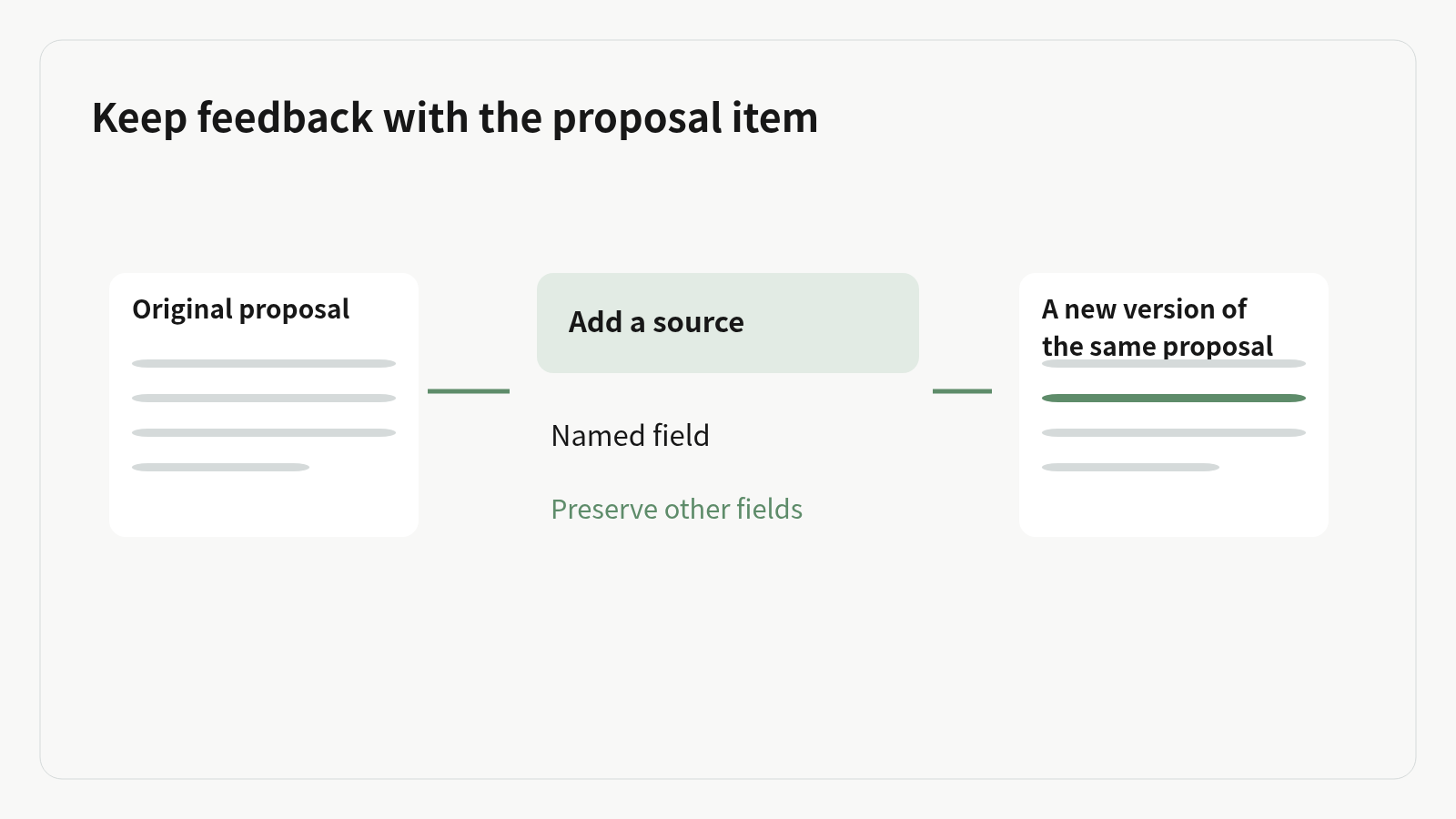
Keep each comment tied to the same content
Open the original proposal before revising it. Identify the record, field and existing feedback under discussion. List the required edits, then ask the Agent to prepare those revisions rather than regenerate the entire batch.
For each edit, show the previous value, proposed value, evidence and content to preserve. A request for a source needs an explanation of what that source establishes. A corrected value needs its origin. Keep unresolved comments in the checklist.
Compare that explanation with the proposal’s actual current differences. Confirm any expansion of scope before accepting it. If the authoritative record has changed, recheck against its current content. Keeping the discussion, edits and review attached to clear objects helps prevent one version being reviewed and another being adopted.
Give the Agent a bounded revision request
Use an instruction like this through your connected Agent:
Read this proposal and its comments. Map unresolved feedback to specific records and fields. Prepare revisions only for the named content, showing before-and-after values, evidence and remaining issues while preserving the rest. Return the revision and original proposal link for comparison. Do not approve, merge or create an equivalent proposal.
Keep review explicitly enabled for changes that need human approval. The reviewer inspects the actual differences and decides whether to merge. An Agent’s “updated” message is not acceptance.
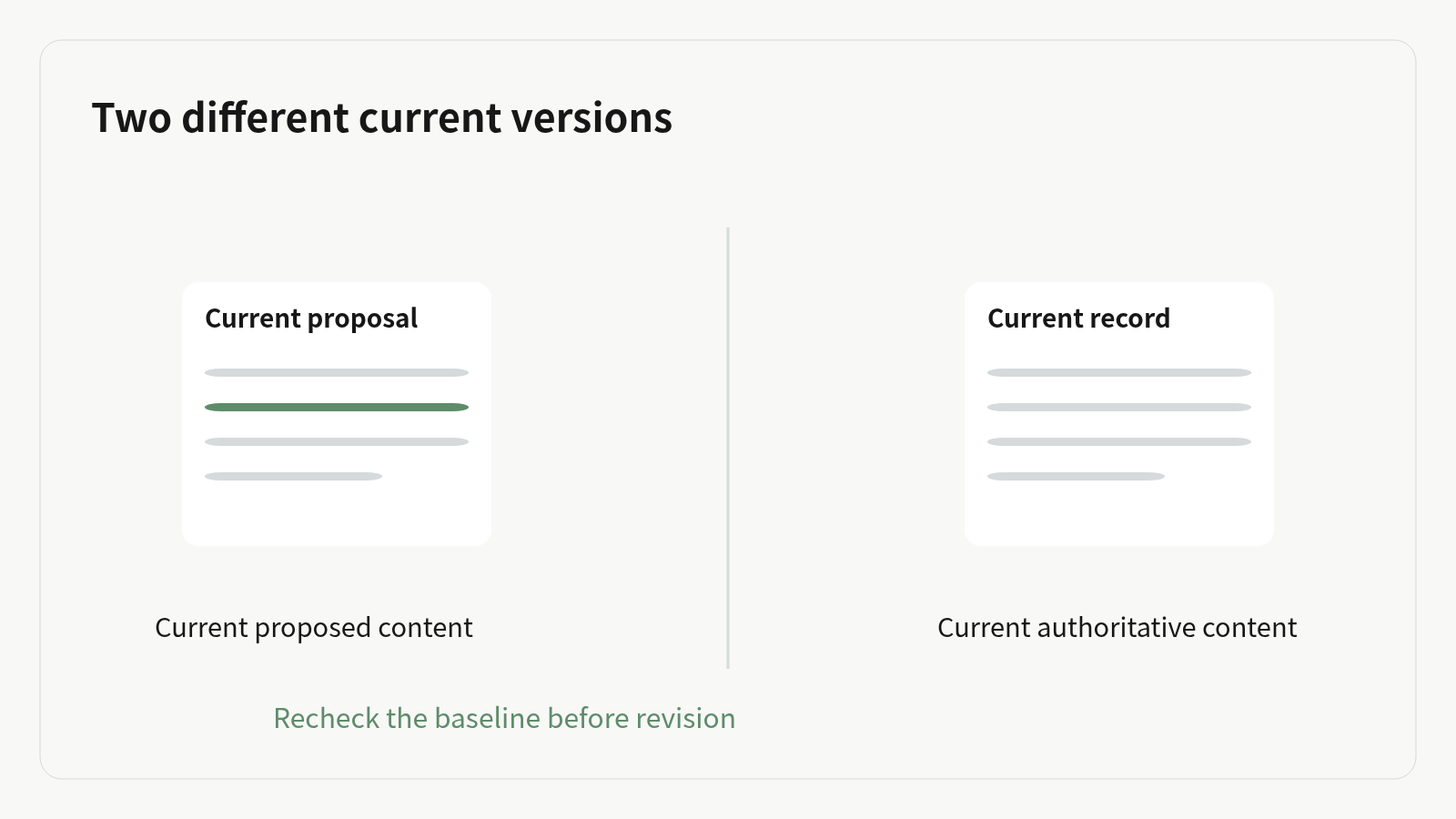
Review both the responses and the full current difference
Check whether each comment received a concrete response: where evidence was added, why a value stayed or changed, and what remains unresolved. Then read the complete current difference, including fields that were not named. A revision summary alone can omit accompanying changes.
Group reviews with multiple items by business decision. Routine items following one rule can be considered together. Source conflicts, broader scope and changed baselines deserve separate attention. Correcting one item does not approve the whole batch.
A minimal checklist links the original comment, proposal item, revision evidence, current result and review decision. Small jobs can keep this in the existing discussion and proposal. For repeated cross-team handoffs, reuse a task Base with proposal relation, owner, unresolved comments and acceptance result. Keep reusable quality standards in a Doc, repeatable operating instructions in a Skill, and one-time decisions in the proposal.
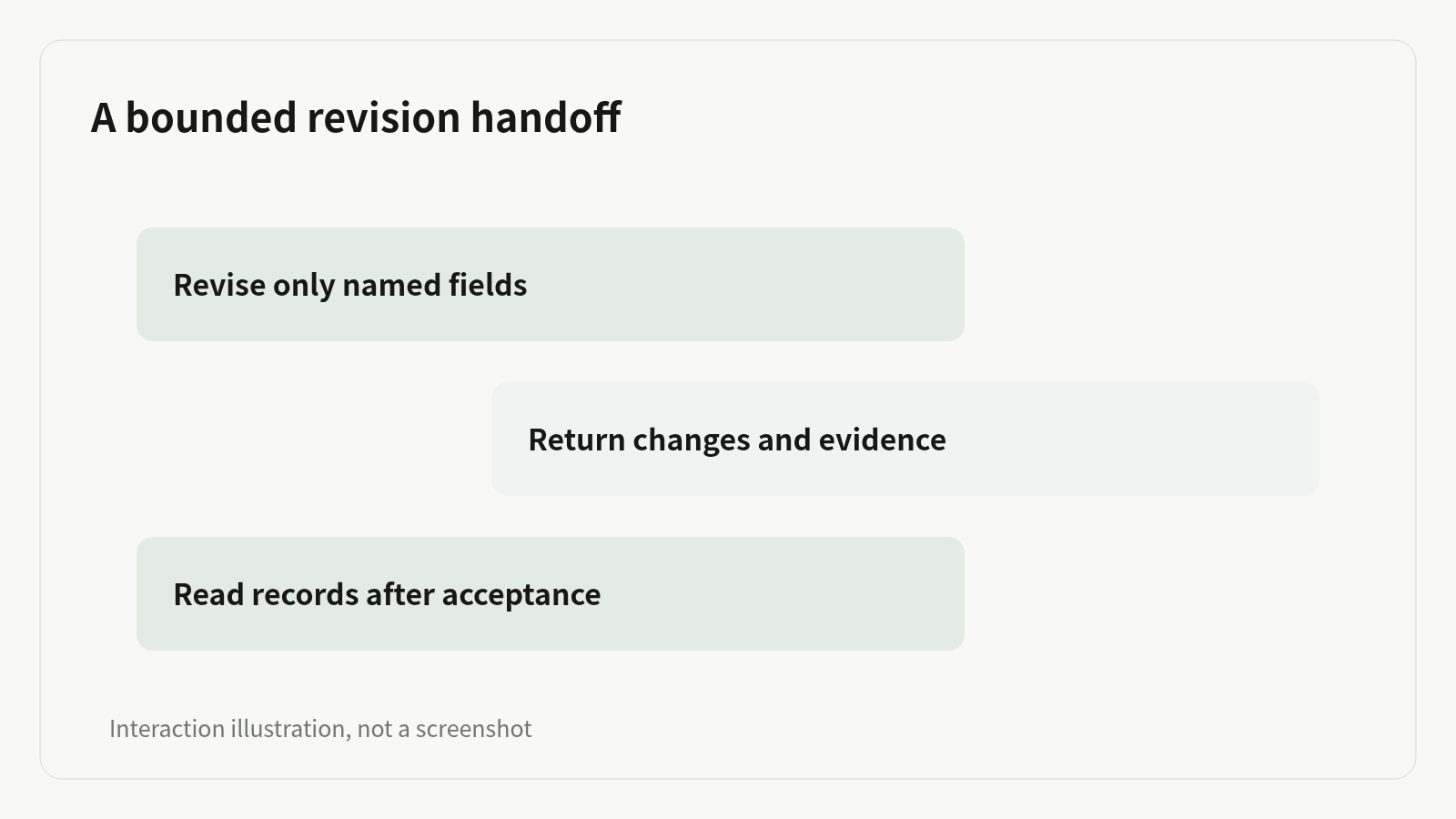
Verify the authoritative record after merge
An authorized reviewer decides whether to accept the revision. After merge, read the target Record. Check that the authoritative fields match the accepted version, unrelated fields retain their values, and sources and history remain traceable. That readback completes the correction of the stored record.
If downstream systems consume it, verify their actual result within the assignment’s scope. A merged CMS record and a correctly rendered page are different acceptance points. A successful data update does not prove that a report, export or notification already uses the new value.
A reliable revision can be traced from feedback to the revised content and then to the authoritative record. When an Agent returns “updated,” open that original proposal and follow the chain. For allocating review attention, see the AI review bottleneck; for the meaning of authoritative data, see what makes an Agent write authoritative.