FORWARD DEPLOYED ENGINEERING
Make AI delivery visible, reviewable, and accountable
Busabase is the delivery workspace for Forward Deployed Engineers and AI implementation teams. It makes ownership explicit, shows the work in progress, and lets customers inspect the real data, documents, and apps before accepting the result.
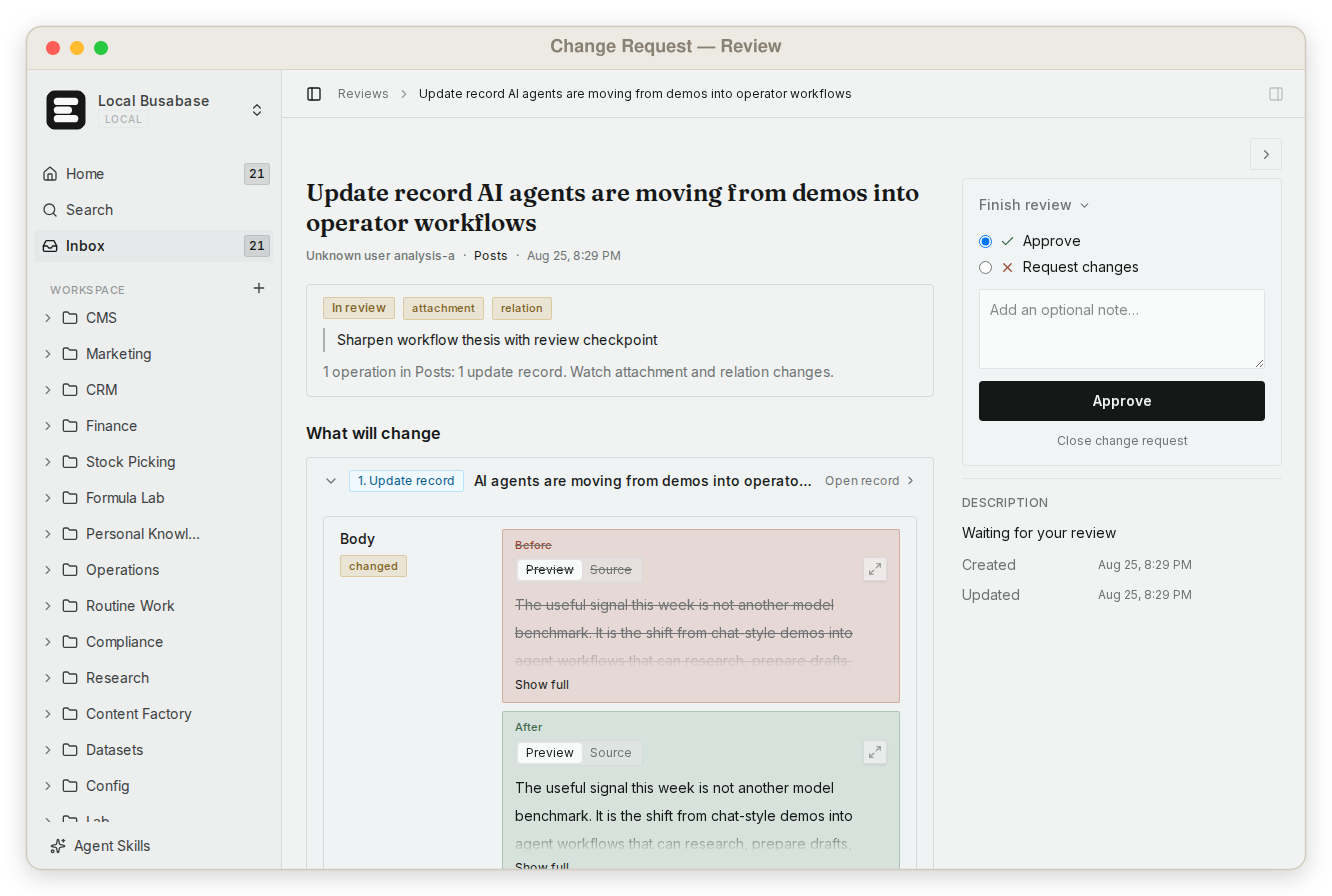
Delivery should not be a black box
Every stage must answer: who owns it, where it stands, and what exists now
An agent saying “done” is not an acceptance test. FDE delivery becomes trustworthy when the owner, scope, current state, evidence, reviewer, and accepted result are visible in one place.
01 · Accountability
Name the owner and acceptance criteria
Tie each workflow to an accountable person, a bounded scope, and a definition of done before the agent starts.
02 · Visible progress
See status, blockers, and the next decision
Follow proposed, in-review, accepted, and operating work without reconstructing the project from chats and meetings.
03 · Inspectable results
Review the work, not the agent's story
Open the actual records, documents, files, diffs, sources, and AirApps. Evidence stays beside the result.
04 · Accepted handoff
Know exactly what the customer accepted
The approved version, reviewer, history, and operating surface remain available after the implementation team leaves.
A visible delivery loop
01
ScopeOwner + acceptance criteria
02
ExecuteAgent work + current status
03
InspectResult + evidence + diff
04
AcceptReviewer + decision + history
05
OperateLive data + workflow + app
One workspace, many deliverables
Agent output stops being a pile of files
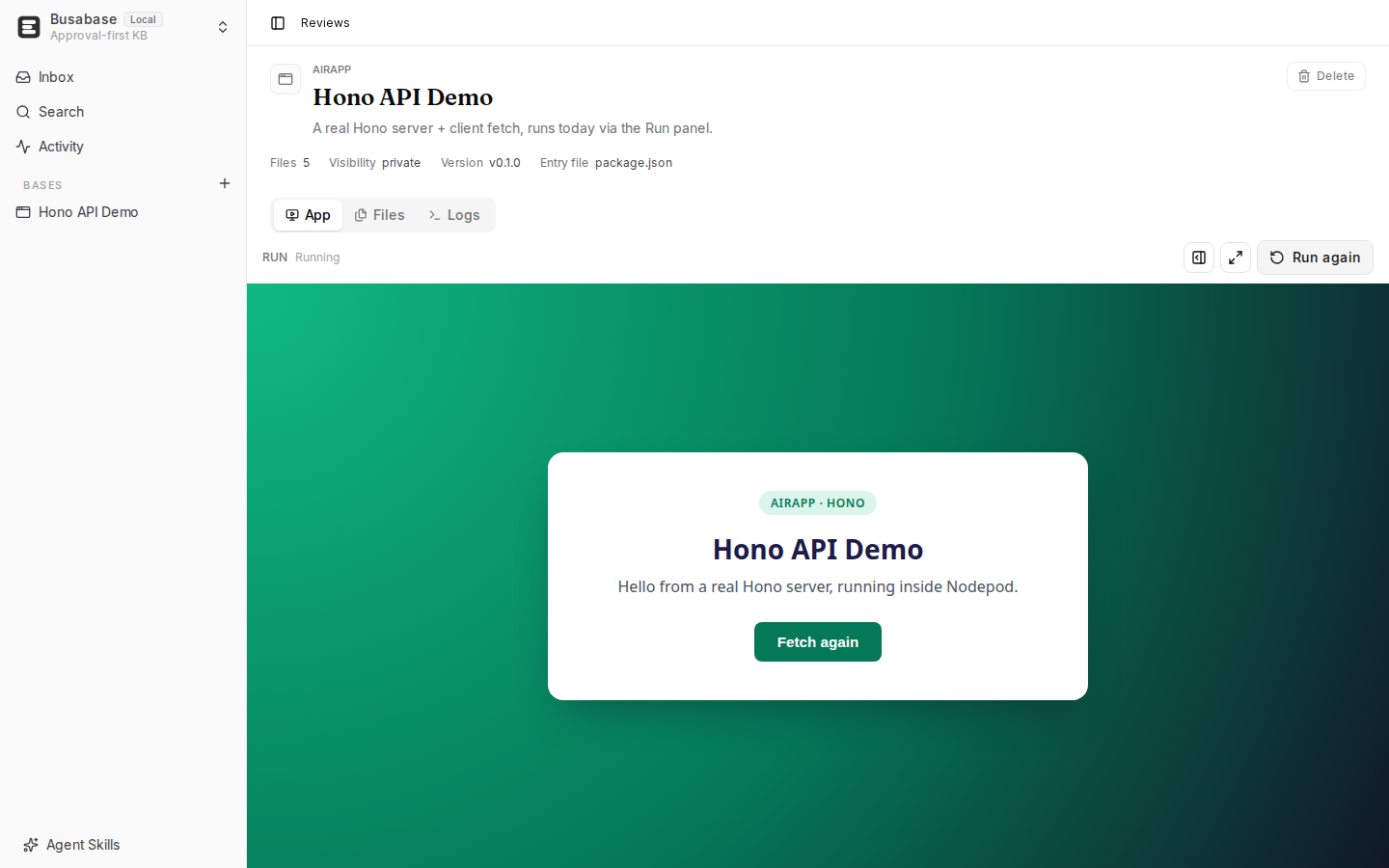
Research becomes a Doc. Entities and decisions become typed records. Source material stays in Drive. The working method becomes a Skill. A purpose-built interface becomes an AirApp. Everything shares the same customer context and history.
That makes handoff concrete: the customer receives a system they can inspect, operate, extend, and reconnect to another agent later.
What the customer keeps
A delivery layer that survives the engagement
| FDE deliverable | Where it lives | What it unlocks |
|---|---|---|
| Business facts and operating state | Bases | Typed records, relations, views, API access |
| Research, decisions, runbooks | Docs + Drive | Durable context with source material nearby |
| The method the agent learned | Skills | Repeatable execution across agents and sessions |
| The interface people use | AirApps | A live dashboard, review surface, or purpose-built tool |
What the FDE team can see
One operating view of the engagement
- Who owns each deliverable and decision
- What is proposed, blocked, under review, or accepted
- Which evidence and source material support the result
- What the customer needs to decide next
What the customer can verify
A handoff grounded in visible results
- The agreed scope and acceptance criteria
- The actual data, documents, skills, and applications
- Who proposed and reviewed each consequential change
- The exact version that becomes the operating system
Questions FDE teams ask
Is Busabase an AI deployment runtime?
No. Your agents and automations run where you choose. Busabase makes their delivery accountable: shared context, visible progress, inspectable results, review, history, and the operating surface left with the customer.
How does Busabase stop FDE delivery from becoming a black box?
The work is represented as records, documents, files, skills, and apps. Material changes arrive with a diff, source, author, status, reviewer, and decision, so the customer can inspect the result instead of trusting a status update.
Does every agent result require human approval?
No. Gate the writes that carry consequences. Scratch work and caches can stay lightweight; customer facts, published content, decisions, and downstream records deserve explicit acceptance.
What remains after handoff?
The accepted data, documentation, evidence, reusable skills, history, and AirApps remain in the workspace. The customer can operate them and connect another compatible agent later.
From black box to shared delivery truth
Let everyone see what is owned, what changed, and what was accepted
Start with one real deliverable and run its complete delivery loop through Busabase.