Can a Skill authorize an agent to approve its own changes?
A matched method, a user assignment, and credential capability serve different purposes in the same write.

A team turns its experience into a Skill so the next agent will not ask the same questions again. The procedure covers sources, fields, checks and a final instruction: “approve and merge automatically.” When another agent finds it for a new job, the saved explanation creates a fresh ambiguity. Is that sentence a method, or authority for this particular action?
The conflict need not come from hostile external material. The team’s own older method may point to another Base, inherit an earlier approval arrangement, or exceed today’s request for a draft. More discoverable methods make it more important to distinguish procedural guidance from current delegation.
Busabase’s playbook documentation draws that boundary: current user instructions win, while a playbook cannot increase key access or independently authorize a merge. Reuse works when the chosen Skill, current assignment and effective capability all refer to the same change.
What a search match establishes
Busabase treats Skills and custom node scenarios as playbooks. Agents search using several phrasings of the request, matching names, descriptions, and scenarios. They can only discover playbooks their key can read. A close name helps find a method; it does not validate every operation for this assignment.
Inspect the method’s name, location, and match reason, then read its full content. If the current instruction asks for a reviewable draft, adapt a procedure that normally writes final content. A workspace-wide match should not cause an agent to copy another department’s target Base into this job.
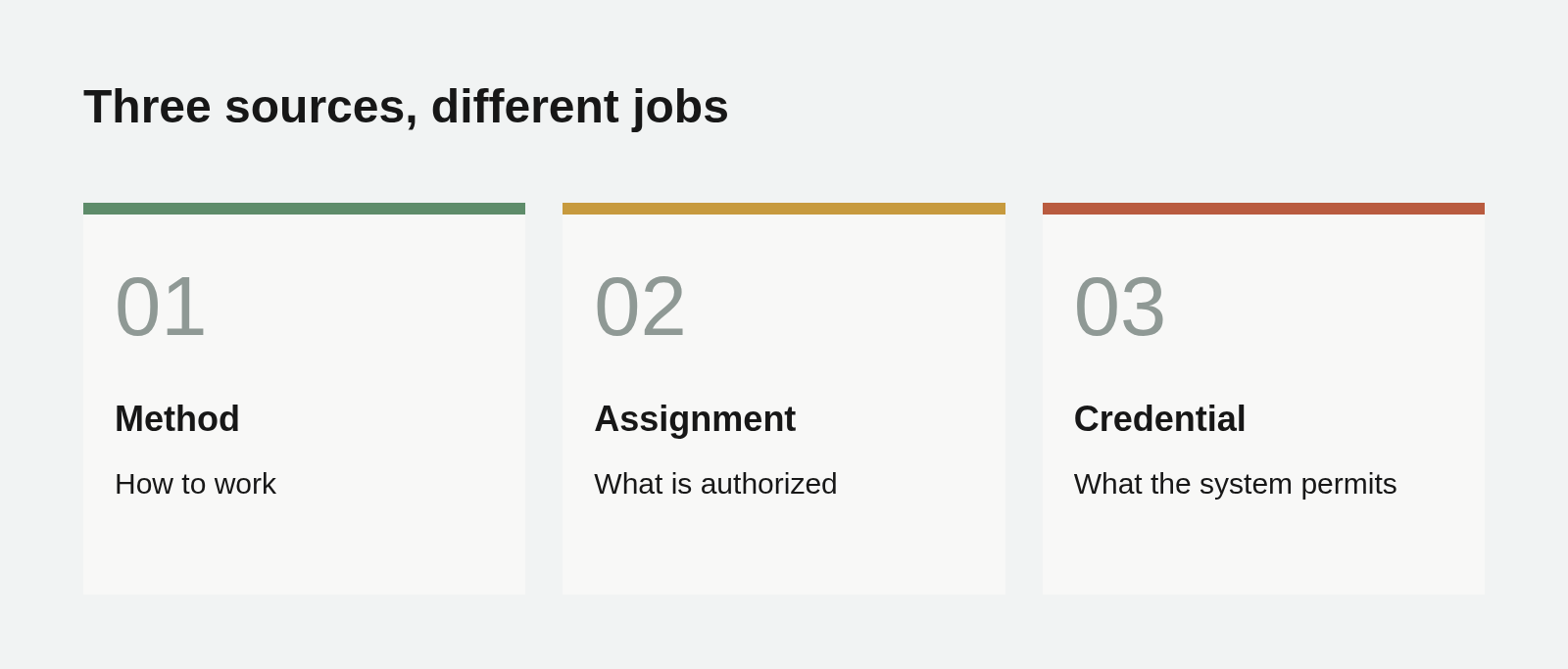
Bring three sources together
The method answers how to work: sources, fields, quality standards, and checks. The user assignment answers what to do this time: object, scope, deliverable, and decisions reserved for a person. Credentials and workspace roles define the operations the system permits.
All three need to describe the same work. A Skill can retain agreed procedures, and a user can provide continuing authority for bounded actions. Each run still needs to establish that the existing authority applies. A broad “auto-approve” instruction inside a Skill does not create a new delegation; a Write key does not establish editorial approval.
Choose the action before choosing the write path
A factual explanation may require no record change. An authorized proposal should identify the Base, record, and fields it intends to change. An authorized merge also requires suitable credentials and a scope check; permission for one job does not extend automatically to neighboring records.
API key levels separate Read, Change Request, Write, and Manage. A Change Request key cannot merge its own proposal. Write can merge immediately by default. If human review is required, preserve it in the actual request with autoMerge: false, or use an appropriate proposal-only credential. A sentence asking the agent to wait is not a server-side merge setting.
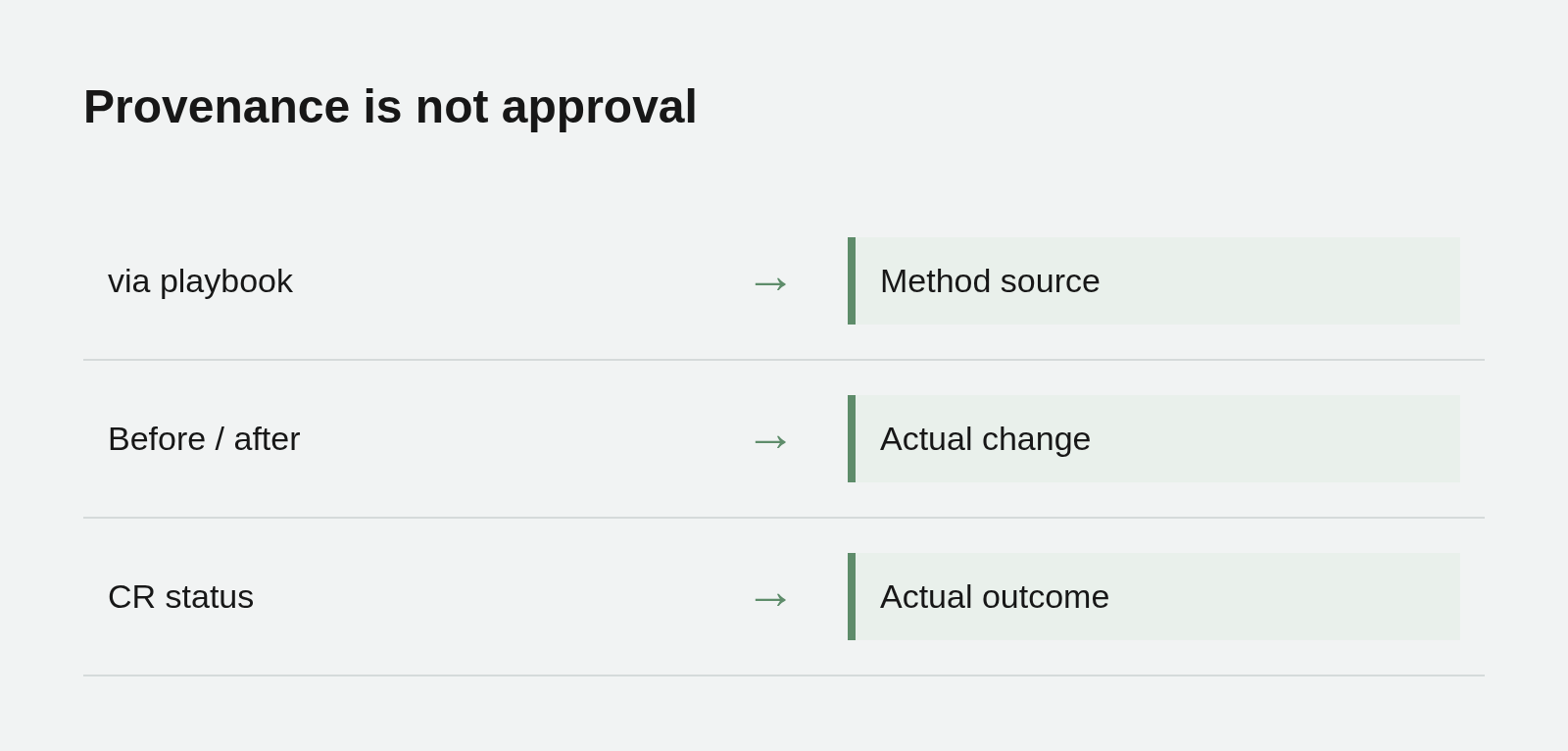
“via playbook” is a provenance marker
An agent that follows a playbook should name and link it. The ChangeRequest and Inbox can show a via playbook chip that returns the reviewer to that source. The writer declares the playbook; Busabase checks that it exists and that the key can read it before recording its name.
The marker is not an approval certificate and does not prove the agent interpreted the method correctly. The documentation also states that a failed playbook declaration can leave the write successful but without a chip. No chip does not prove no write occurred; a chip does not prove business authorization. Inspect the diff and actual state.
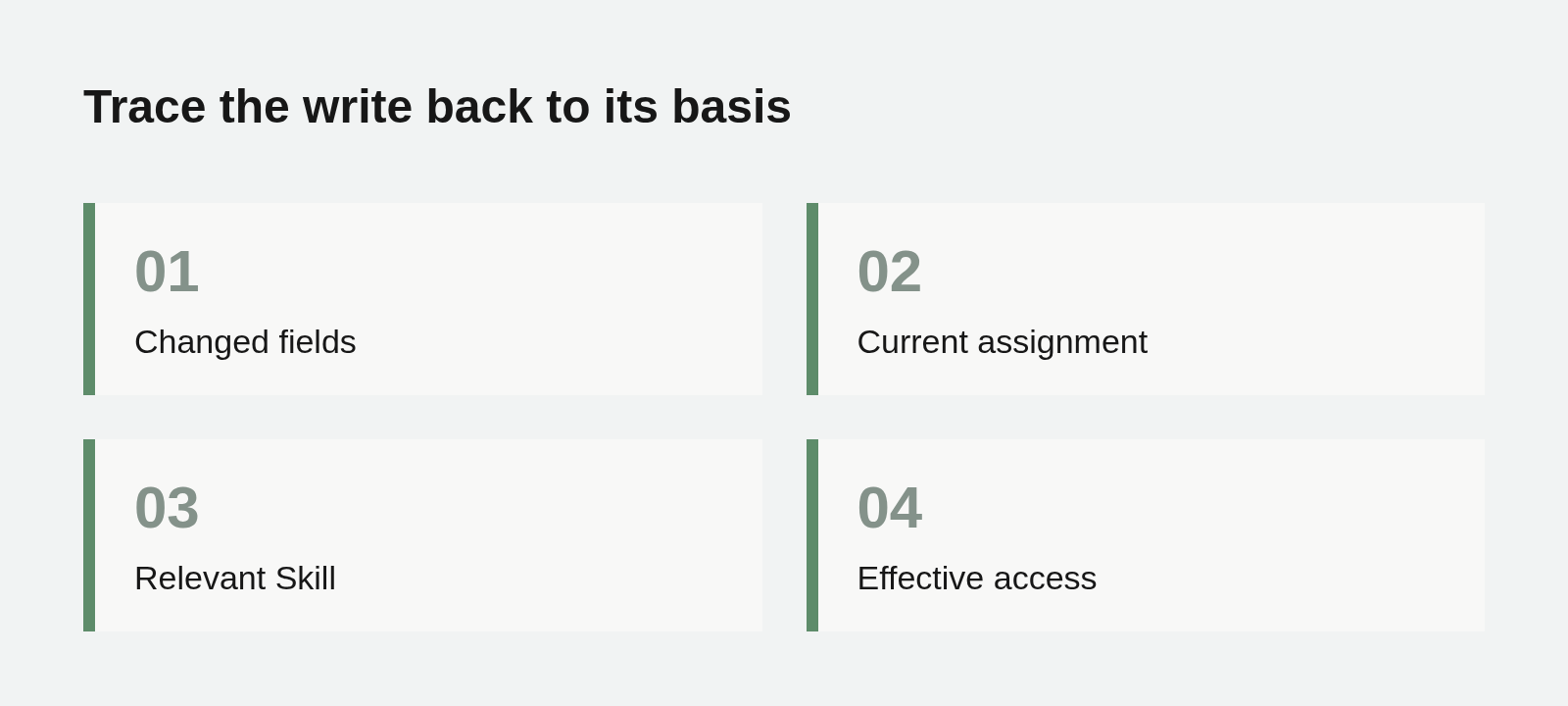
Review a change by tracing it backward
Begin with the target record’s before-and-after values. Open the cited method and check its relevance to the current assignment. Compare the requested scope with the changed records, fields, and merge action. Then inspect the CR state and, if merged, read the canonical record.
A useful handoff contains the method link, current task scope, target record, CR link, and unresolved decisions. It does not need the key value or unrelated private conversation. This is an operating practice, not a claim that a checklist automatically detects or blocks all prompt injection.
Resolve conflicts through the current request
If a Skill says Leads but the user says Partners, the current user instruction wins. If the conflict involves publishing, deletion, or merging that has not been authorized, retain the prepared work and identify the specific decision still needed. Reusable methods reduce repeated explanation; they do not make new scope decisions for people.
Package installation boundaries concern what becomes live on installation. Search coverage and stale extraction concern whether material can be found. Finding, installing, using, and authorizing a merge are separate actions.
Questions reviewers actually need answered
Does a Write key settle the authorization question?
No. It establishes capability. Confirm that the current assignment permits the operation, and preserve review in the request if that is required.
Does a missing chip prove the agent never read a playbook?
No. The agent may have omitted the declaration, or the source check may have failed. Ask what it used and inspect both source and write.
How can a team improve method discovery?
Use task names and descriptions the team actually says, confirm the key can read the node, and try the Playbooks search preview. Accurate discovery still needs a scope and permission check.