An Agent archived a business record. Restore its identity, then verify its current values.
Recover the original record and its relationships instead of creating an untracked replacement.
An agent helps organize business data, and afterward a record the team still needs is missing from the list. Customers, projects or older tasks may still depend on it. The immediate goal is to recover the record without losing those connections.
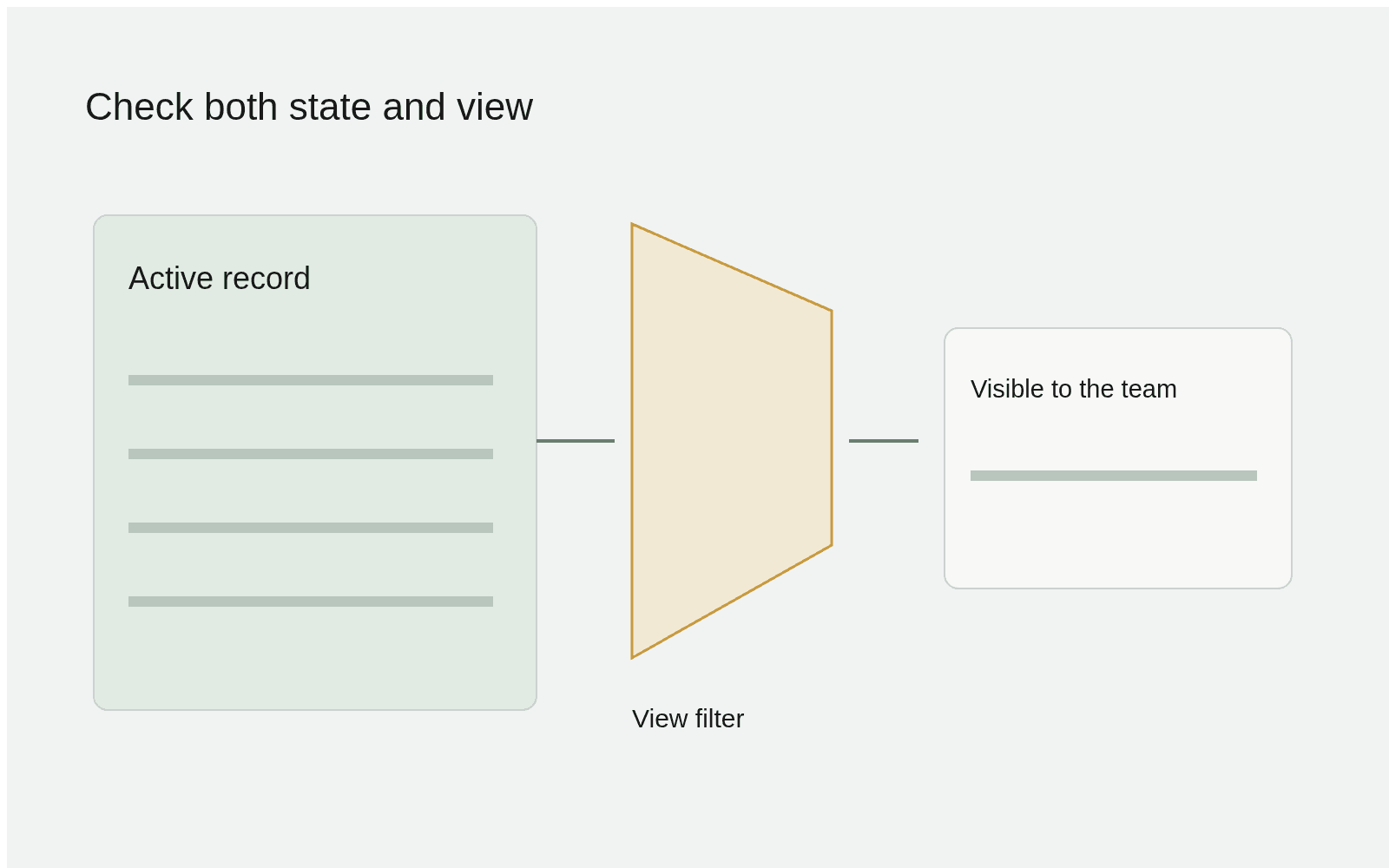
Recreating it from memory can introduce a second identity and leave later work pointing to the wrong object. First establish what happened, act on the original record and check the view the team actually uses. Recovery should preserve the business relationships around the information.
Find the record before rebuilding anything
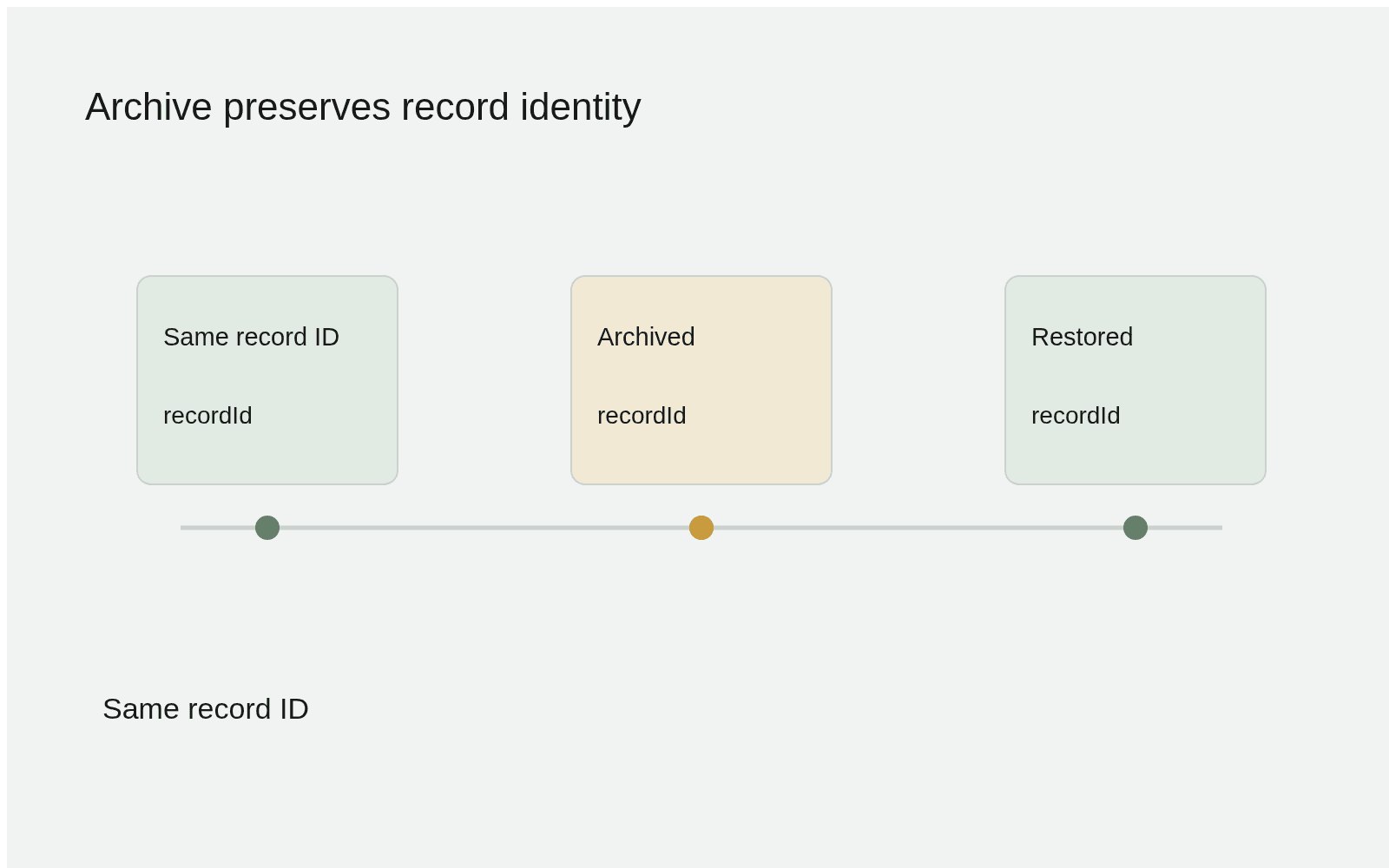
A record disappearing from an active list does not establish that its contents were permanently deleted. First identify the original record ID, Base, archive ChangeRequest and last known head. A list filter, lost access and an archive are different conditions. Creating a replacement immediately can introduce a second identity and split relationships across two records.
Proposed operating method
Archive and field correction solve different problems
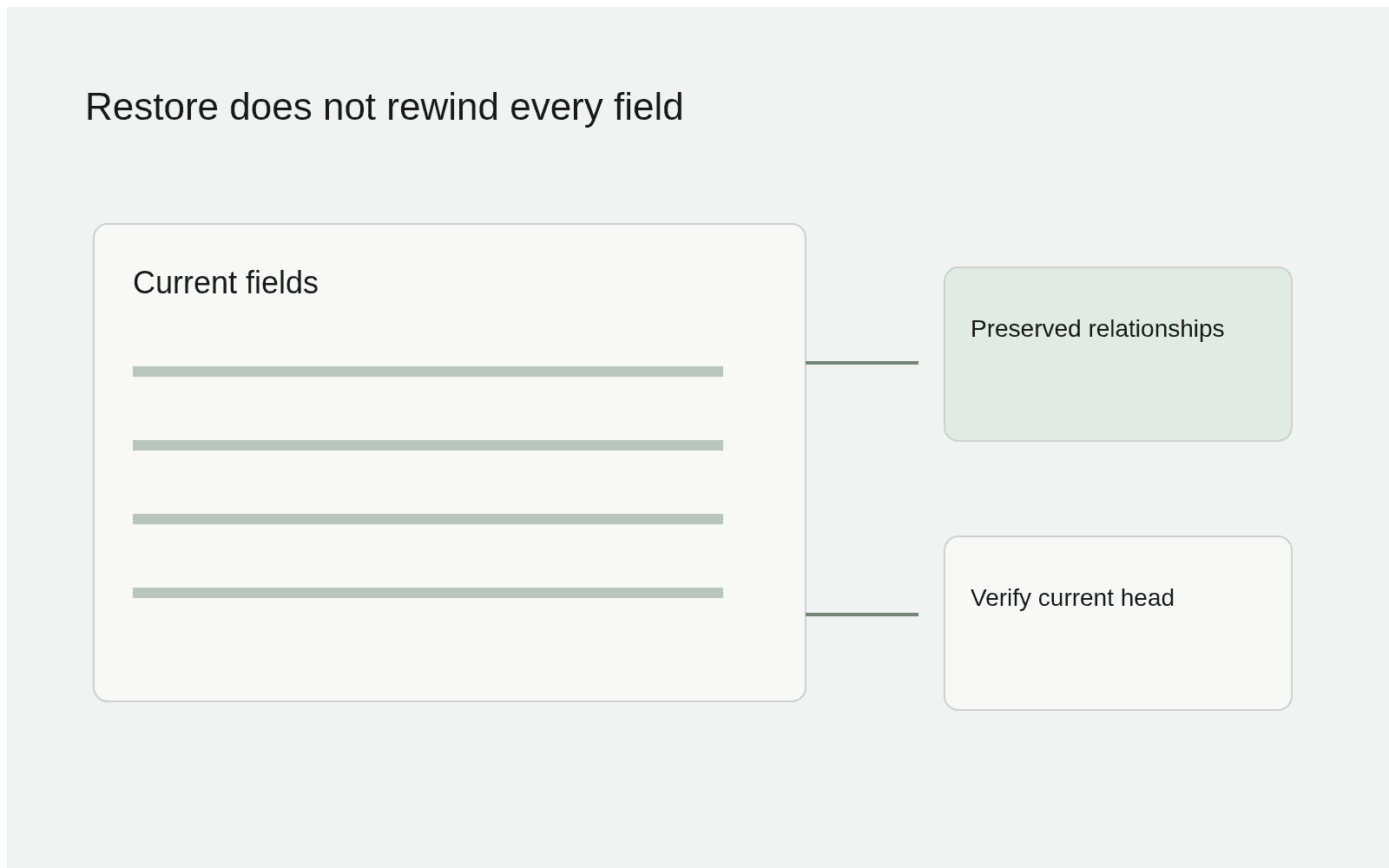
Separate two cases: an archived record needs to become available again, while an existing record with incorrect information needs a content correction. Restoring availability does not automatically rewind all its fields.
Prepare a recovery manifest
Before acting, save the original ID, Base, current lifecycle state, current headCommitId, archive CR and the relationships that must remain intact. This can live in a recovery task Base linked to the affected record, with a Doc describing the team’s recovery rules. Record the reason, responsible reviewer and verification result. Those are suggested workflow resources, not a requirement to build another database for one isolated recovery.
Proposed operating method
Propose restore against the same identity
Check the current state before requesting recovery so you do not overwrite a colleague’s recent changes. After the request takes effect, verify the original information and relationships rather than relying on a success message.
Read the restored record, not just the success message
Check the current state before requesting recovery so you do not overwrite a colleague’s recent changes. After the request takes effect, verify the original information and relationships rather than relying on a success message.
Proposed operating method
Handle conflicts and uncertain responses explicitly
Check the current state before requesting recovery so you do not overwrite a colleague’s recent changes. After the request takes effect, verify the original information and relationships rather than relying on a success message.
Close with evidence and known boundaries
A useful agent instruction is: “Find this archived record and its archive CR. Show its current state and protected relationships; propose restoration for review. After approval, reread the same ID and report the active state, current values and remaining exceptions.” Keep the record link, restore CR and verification result in the recovery task. Restoring Busabase does not undo downstream emails, exports or external indexes, and archive is not a promise of permanent attachment erasure. Test only on explicitly authorized test records; a real recovery does not need an experimental deletion.