ARTEX and agent memory: keep the evidence, keep credentials out
An agent finishes a task. What should it remember?
An agent finishes a task. What should it remember? Saving tool responses, API descriptions, configuration snippets and outcomes together can make the next run easier. If those materials contain usable credentials, the same convenience can extend to whoever gains access to that memory.
Unit 42’s November 11 ARTEX research describes attackers connecting public identity workflows, exposed APIs and existing credentials into paths to cloud access. Observed behavior included pivots within about a minute of a credential download and validation of more than 200 client secrets in roughly three minutes.
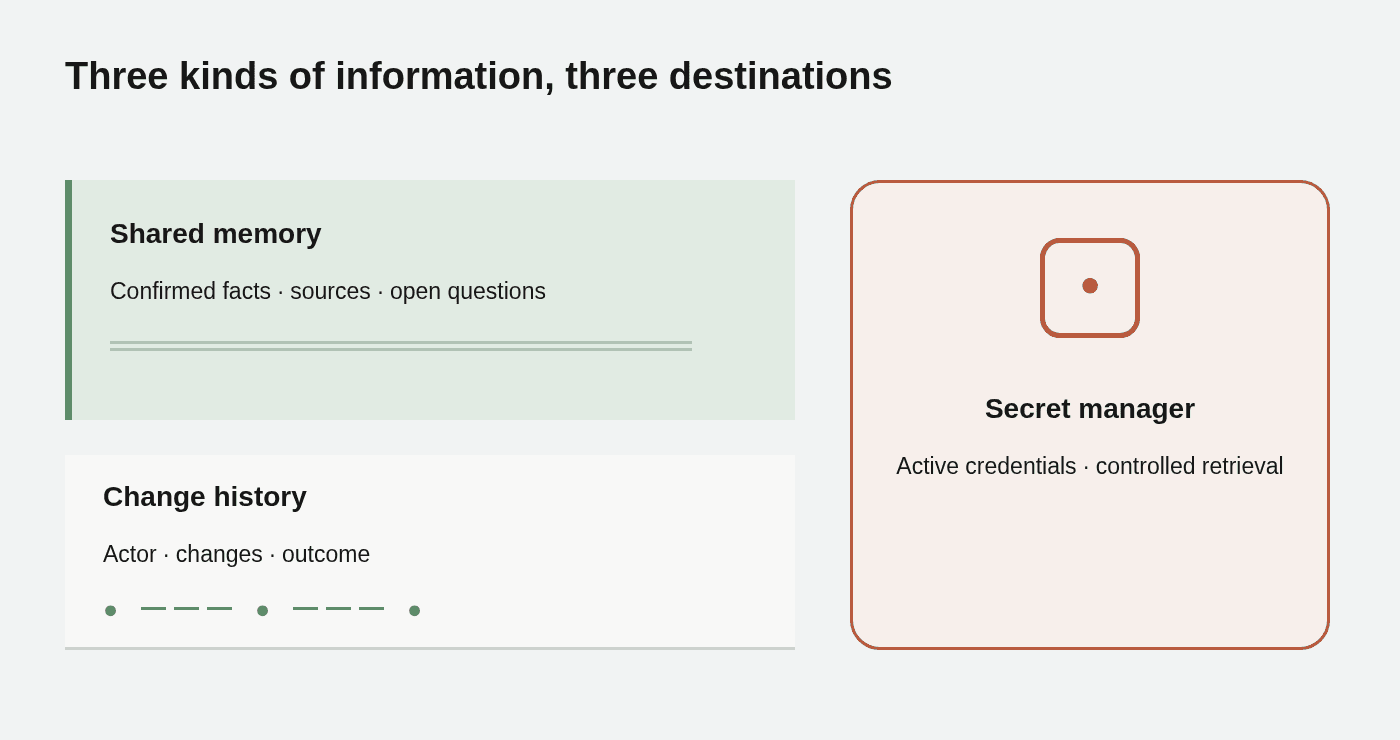
For teams maintaining agent memory, the practical question is what to persist. Reusable knowledge, access authority and evidence of an operation serve different purposes. Treating them as one undifferentiated context dump makes the boundary harder to control.
How saved information becomes an action map
Unit 42 describes tools that inspect feedback, correct failed requests and continue through discovered APIs and identity relationships. Routes in downloaded OpenAPI specifications and source maps were targeted almost immediately. In the reported activity, exposed credentials and identity workflows enabled progress without exploiting a software vulnerability.
The researchers also observed a GET to the same path after almost every successful write, alongside write-then-delete tests on storage buckets. Automated operators were checking whether their changes worked.
The report does not establish an attack against an agent-memory product or describe these events as memory poisoning. Its relevance to memory follows from the information it shows attackers using: an operational record containing interface routes, environment details and active credentials can supply both a map and a means of access. Retention decisions need to account for that difference.
Remember the work; retrieve secrets through controlled systems
Task summaries, confirmed rules, source links and unresolved questions help subsequent agents continue. A working secret has a different role: possession may grant access to a resource. Including it in shared context exposes access material to every component that reads the context.
A useful memory can record the controlled location of a secret, its purpose, its owner and relevant rotation information. The execution environment can obtain the value through an authorized mechanism. Avoid copying that value into shared Docs, Base records, completion summaries, change rationales or attachments. Short-lived tokens still deserve sensitive handling; expected expiry alone does not justify indefinite retention.
Check raw tool responses, error output and configuration exports as well as the visible summary. A sanitized paragraph can sit beside an attachment containing an authorization header or connection string.
Unit 42 recommends moving function secrets into a secrets manager, replacing long-lived cloud keys with role-based access, and removing administrator credentials from provisioning records. The same principle supports memory design: preserve continuity while keeping usable access material inside the systems responsible for managing it.
Preserve changes that the current state cannot explain
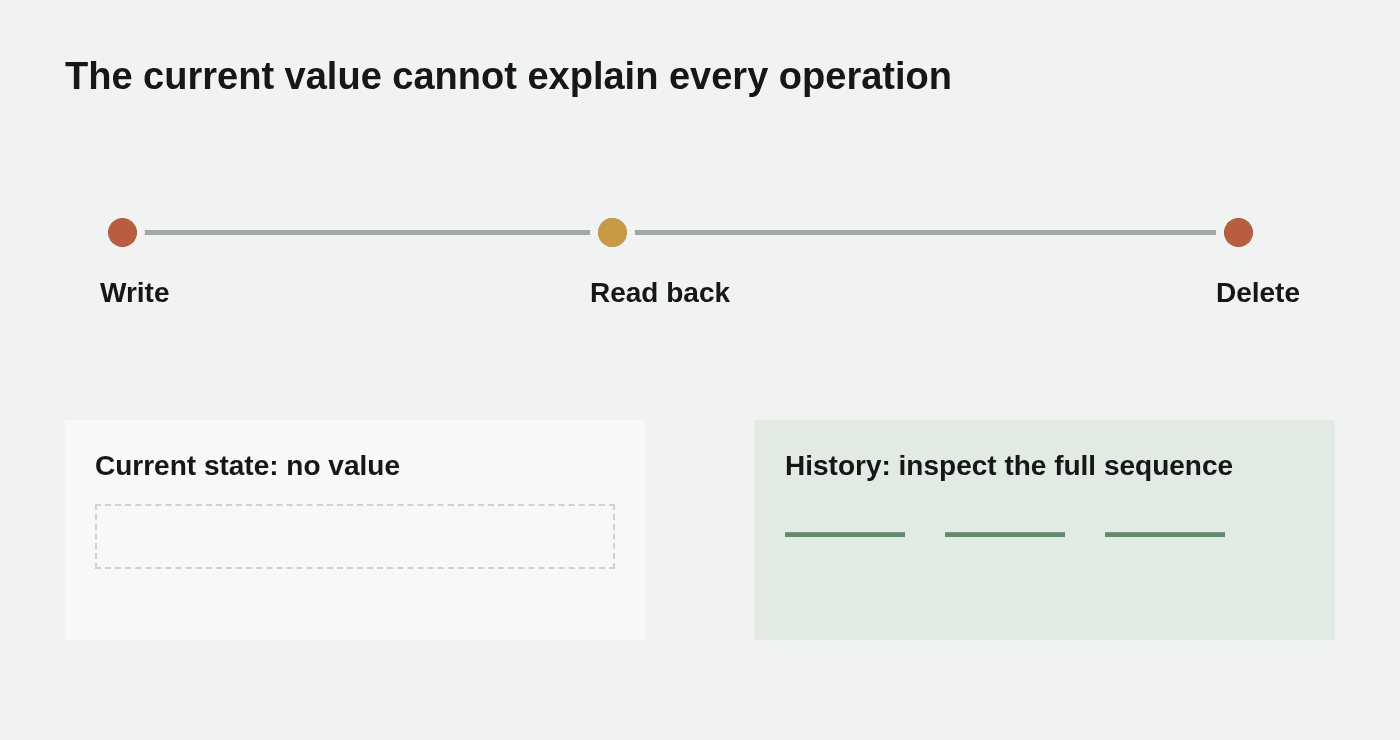
A current record cannot show every intermediate operation. A write followed by a deletion may leave no current value. An incorrect update may have been read by another agent before someone restored it.
Investigation therefore needs more than a completion message. It needs the affected resource, action, outcome, actor, before-and-after values where available, supporting evidence and downstream use. Link an operational receipt to the real change or execution record rather than treating an agent’s prose as proof.
Preserving evidence does not require copying every sensitive response into memory. Keep enough information to locate the operation, with authorized access to original material at its controlled source.
Separate concise current summaries from change history. Future tasks can use the accepted state; investigators can follow the related records to inspect the decisions behind it. If the originating system never captured an action, a retrospective narrative cannot reconstruct missing evidence.
Organize reviewed memory in Busabase
A team can use Busabase Docs for summaries and confirmed rules, Bases for structured facts, and links to connect sources and related records. One possible setup keeps accepted facts in current records, proposes candidate updates through ChangeRequests, and associates the supporting evidence with the actual changes.
Whether a change pauses for review depends on the connection’s permissions. Busabase Security distinguishes Read, Can propose changes, Can write and Manage. A proposal-only key leaves changes awaiting review. A write-capable key can apply changes immediately while preserving a merged change record. A ChangeRequest by itself does not guarantee human review before application.
For material that requires judgment, reviewers should check whether secrets are present, whether sources support the proposed facts, and whether a temporary inference is becoming a standing rule. Important rules and identity-related facts warrant careful proposal permissions. Teams can decide separately which low-impact, verifiable updates may apply directly.
This arrangement helps govern accepted memory and its history. Secret detection still needs handling before submission and during review; do not assume every credential will be detected automatically. Exposed credentials require revocation or rotation by the responsible issuer.
If a credential entered memory, address its remaining authority
Deleting a record helps clean up the material, but copies may remain in attachments, exports, logs or environments that already read it. Have an authorized owner revoke or rotate the credential and inspect its usage, then address accessible copies and associated materials.
Follow the timeline: when it entered memory, which identities could read it, what writes or deletions occurred, and which downstream tasks consumed related results. Restoring the current record resolves its current value. External actions and disclosed information need separate remediation.
Start with one existing agent connection and inspect a recent summary with its attachments. Identify what the next run needs to reuse, what actually grants access, and which claimed outcomes lack a traceable operational receipt. Fix those gaps before broadening the shared memory.
Durable memory becomes valuable when teams can reuse its facts with confidence. Keep summaries concise, changes inspectable and active credentials in controlled secret-management systems.