Busa Agent Shelf template: track AI shopping recommendations and improve product information
Turn repeated buyer questions into sourced product-data improvements.
A buyer asks an AI shopping assistant for a product that fits a particular need. The answer names competitors and explains why they fit. Your product seems relevant too, yet it never appears. Rewriting the whole listing immediately may change the wrong information—and one answer cannot establish why the assistant omitted it.
Busa Agent Shelf organizes the investigation: real buyer questions, returned answers, selected competitors and proposed listing changes with sources. It gives the team an evidence trail from a missing recommendation to a decision about one product field. It does not guarantee inclusion or operate the shopping platforms itself.
Preserve the question and the actual answer
Start with buyer language from authorized reviews, support requests or search terms. The template suggests a manageable set of five to twenty questions, each linked to the products that should be relevant. A broad popularity question and a specific compatibility question represent different decisions; keep them distinguishable.
An operator or authorized external agent asks the questions through the platform's normal interface or an entitled official API. Use a fresh session without a brand hint and record question, platform, date, returned products, their order, stated reasons and an answer excerpt. Keep an evidence link where available. The AirApp itself never contacts a shopping assistant.
No product answer and a recommendation that omits your product both need clear descriptions. The template uses position zero for “not shown”; a refusal should be explained in the excerpt rather than turned into evidence that a competitor won. Retain the actual response instead of reconstructing the answer from memory.
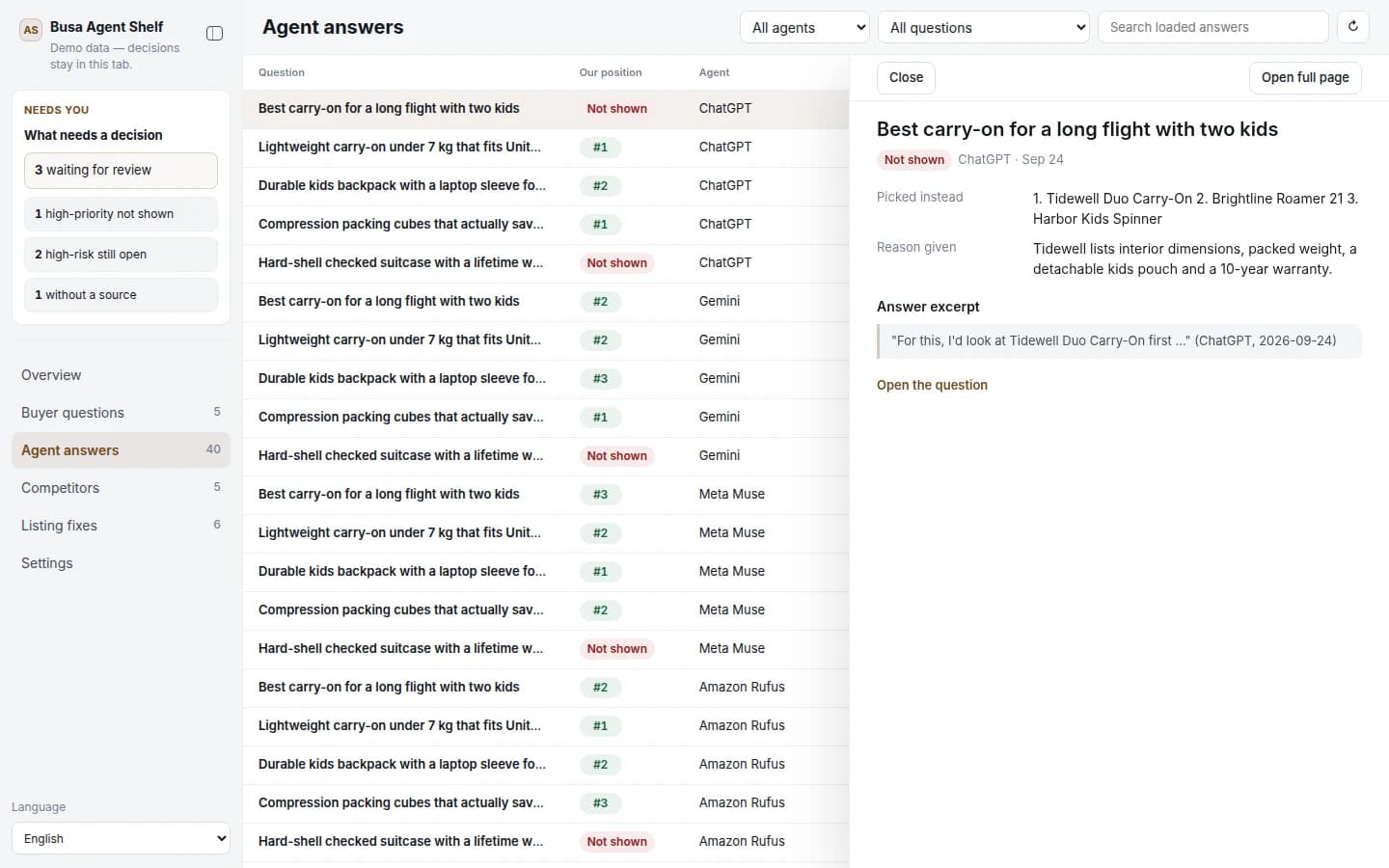
Official template screenshot · sample data · Original English interface; not live customer results. View template
Compare like with like before describing movement
One answer is a sample. Repeat comparable questions with the same market and recorded conditions, preserving the check date across a run. Personalization, platform behavior and available sources can change an answer; a rank shift alone does not reveal the cause.
The template derives share of shelf per platform from the proportion of tracked questions showing the product on the latest check date, compared with the previous check. Keep the question set and coverage visible. A smaller denominator or missing checks should not look like improved visibility. This is answer visibility within your checks, not market share, sales or search traffic.
Look beside your own listing
Read the assistant's stated reasons alongside the actual listing and cited sources. A competitor may disclose dimensions, return terms or compatibility details that your product also has but does not clearly document. Alternatively, the competitor may simply fit that need better.
The answer's explanation is evidence of what it said, not proof of its internal ranking mechanism. Confirm the gap independently on your own listing. Do not copy a rival's specification, certification or warranty merely because the assistant mentioned it. If your product does not meet the requirement, accept that boundary instead of optimizing the wording into a false claim.
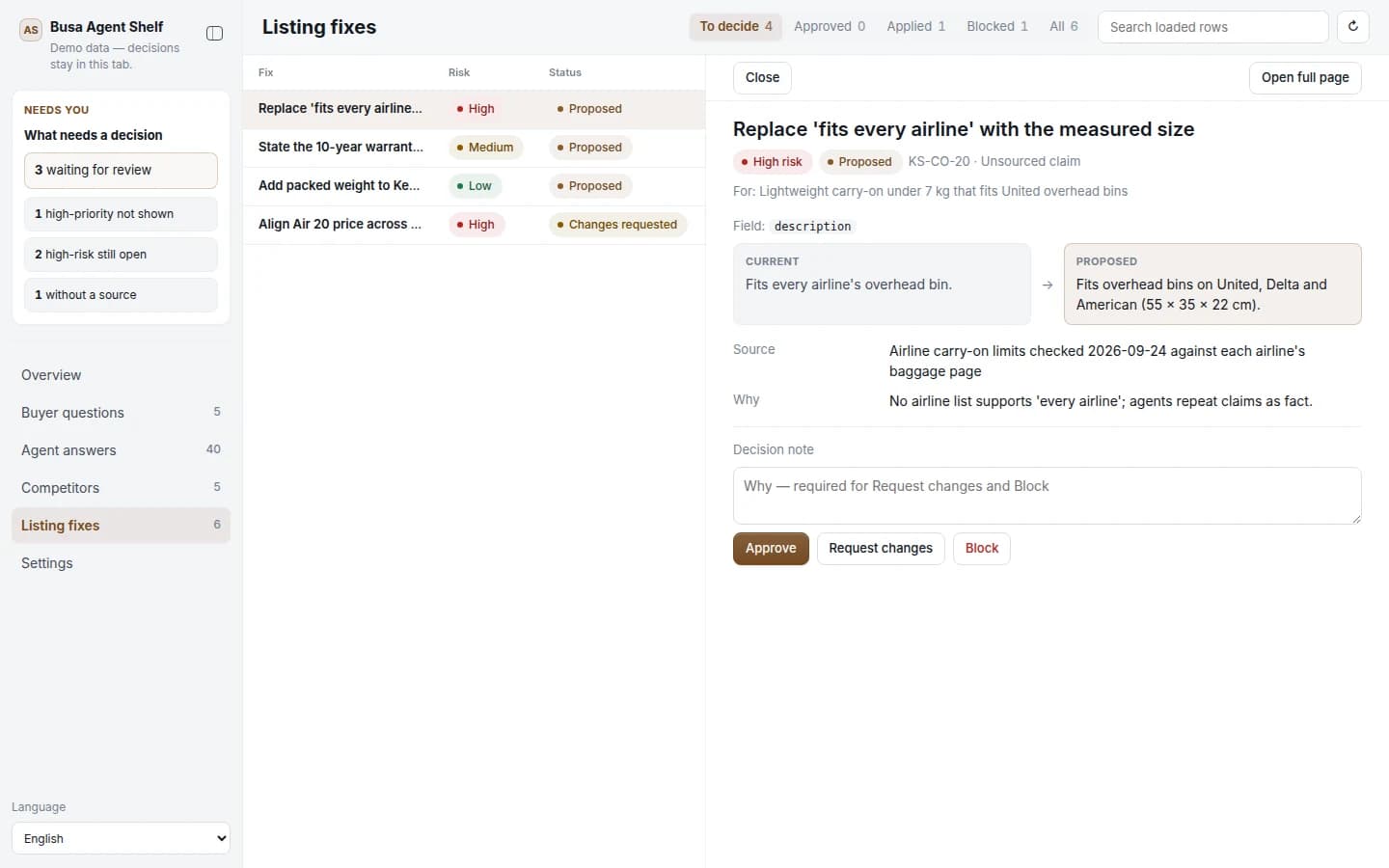
Official template screenshot · sample data · Original English interface; not live customer results. View template
Give each proposed field its own source
Install the template from its public page after signing in and selecting the intended workspace. Its five Bases store buyer questions, observations, competitors, listing fixes and settings. Installation does not connect a store or authorize access to a shopping platform.
A fix changes one field of one product and keeps the current value, proposed value, supporting source, relevant observations, risk and decision. Price, warranty, certification, safety and compatibility changes are high risk. A value without a source also stays high risk and unresolved.
An adaptable instruction is: “Read these saved answers and the authorized listing. Identify differences supported by our own product evidence. Propose one field per fix, link the source and observations, and leave unsupported claims unresolved. Do not edit the store.” This creates a reviewable output rather than a wholesale rewrite whose factual changes are difficult to inspect.
Approval and application happen in different places
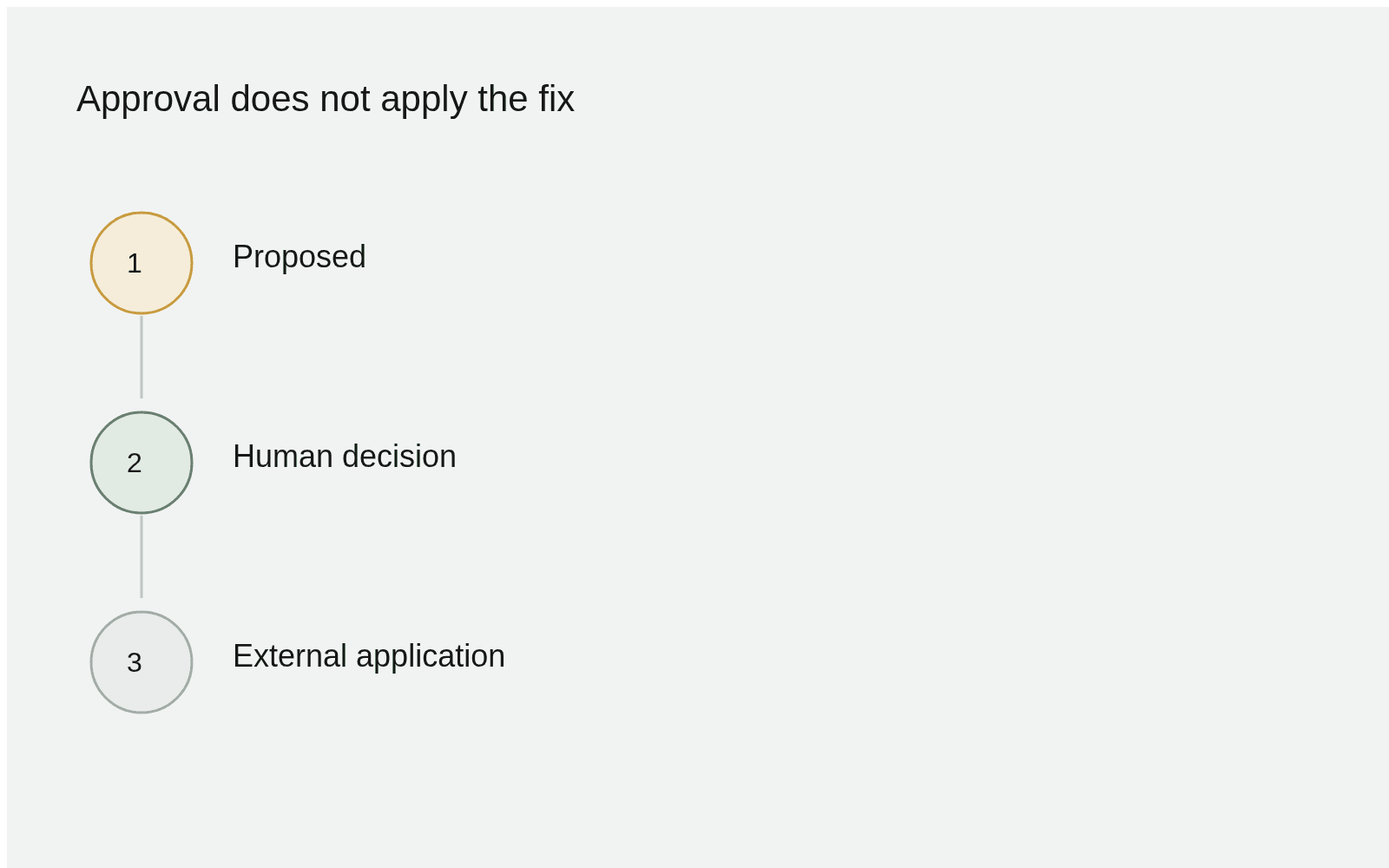
The AirApp records a person's approval, requested changes or block decision on a fix. It does not edit Shopify, a marketplace or a catalog. An authorized external agent applies only approved fixes, then records the application date. Preserve actual receiving-system evidence so “approved” does not silently become “published.”
Busabase writes use ChangeRequests, with review behavior determined by credential permissions. Where a person must accept a proposal before it becomes current, configure proposal-only access or require review. Reread the current record after merge and check the destination separately after application.
Recheck the same question
The next round should use comparable conditions and retain both improved and unchanged answers. Report the movement by question and platform. A change followed by a recommendation is a useful observation, but one round does not prove the edit caused it.
Start with a small, real question set and one defensible listing gap. The template source documents the boundaries. The broader agentic commerce catalog discussion explains why product truth matters; this loop makes a particular correction inspectable.