Memory for Codex: resume from verified progress
Keep completed work, unknown outcomes and the next safe action separate.
The awkward moment in a long Codex task often comes when you open the next session. Files have changed, a request was submitted, and the previous summary says the job is almost finished. Yet continuing safely requires answers the summary may not contain: which file was reviewed, did the timed-out request succeed, and would another submission repeat an action that already happened?
Pasting the old conversation back can recover the story without recovering dependable progress. “Ready to submit” may have been a plan. “Executed” may describe an attempt. Treating either as a verified outcome risks skipping unfinished checks or repeating work with external consequences.
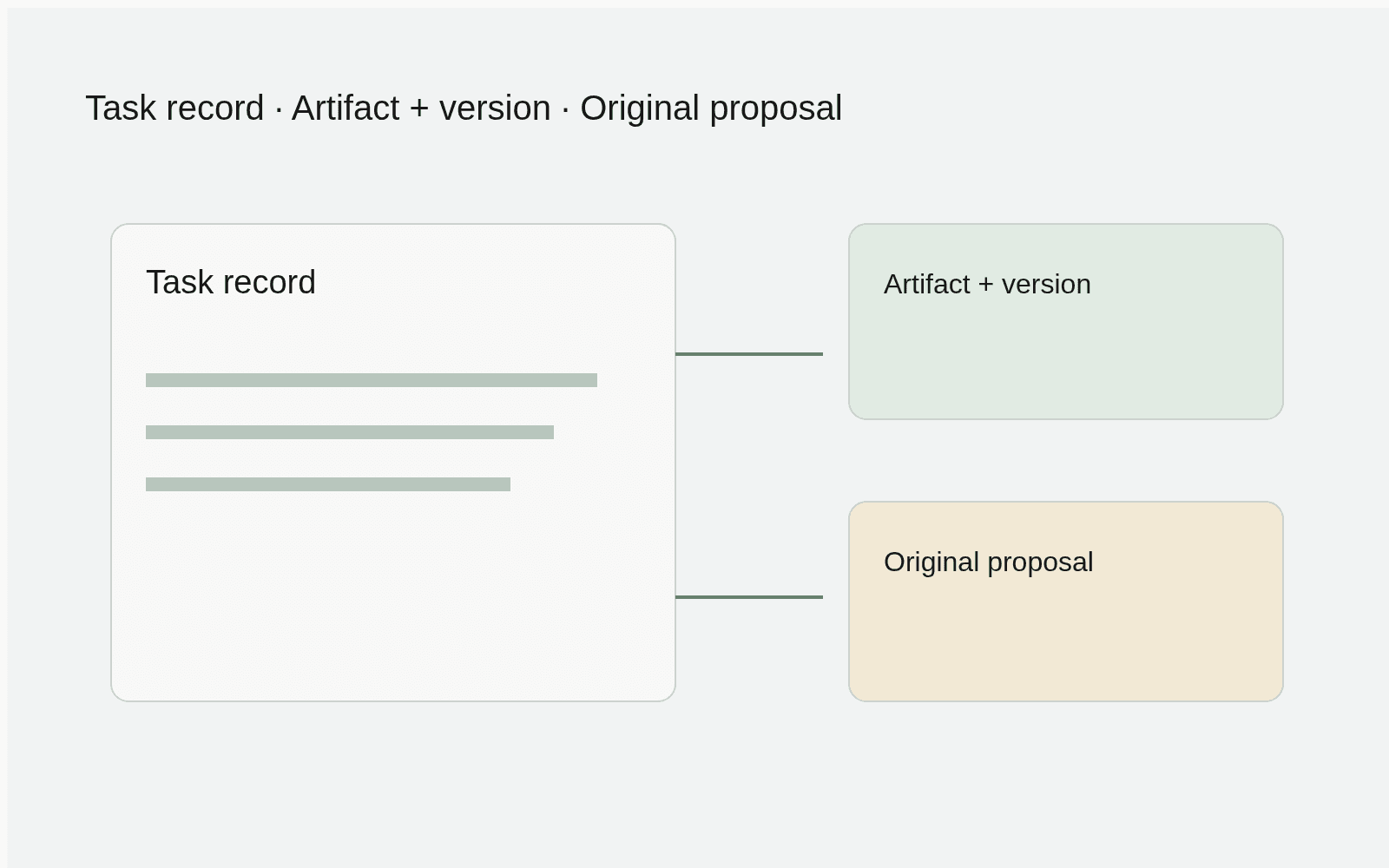
Useful memory gives the next session a trail to inspect: the intended result, its artifacts, the last verified stage and the outcomes still unknown. Busabase can connect the task to file references and original proposals, so Codex starts its inspection at a meaningful checkpoint. The repository and receiving services still establish what actually happened.
Three meanings of progress
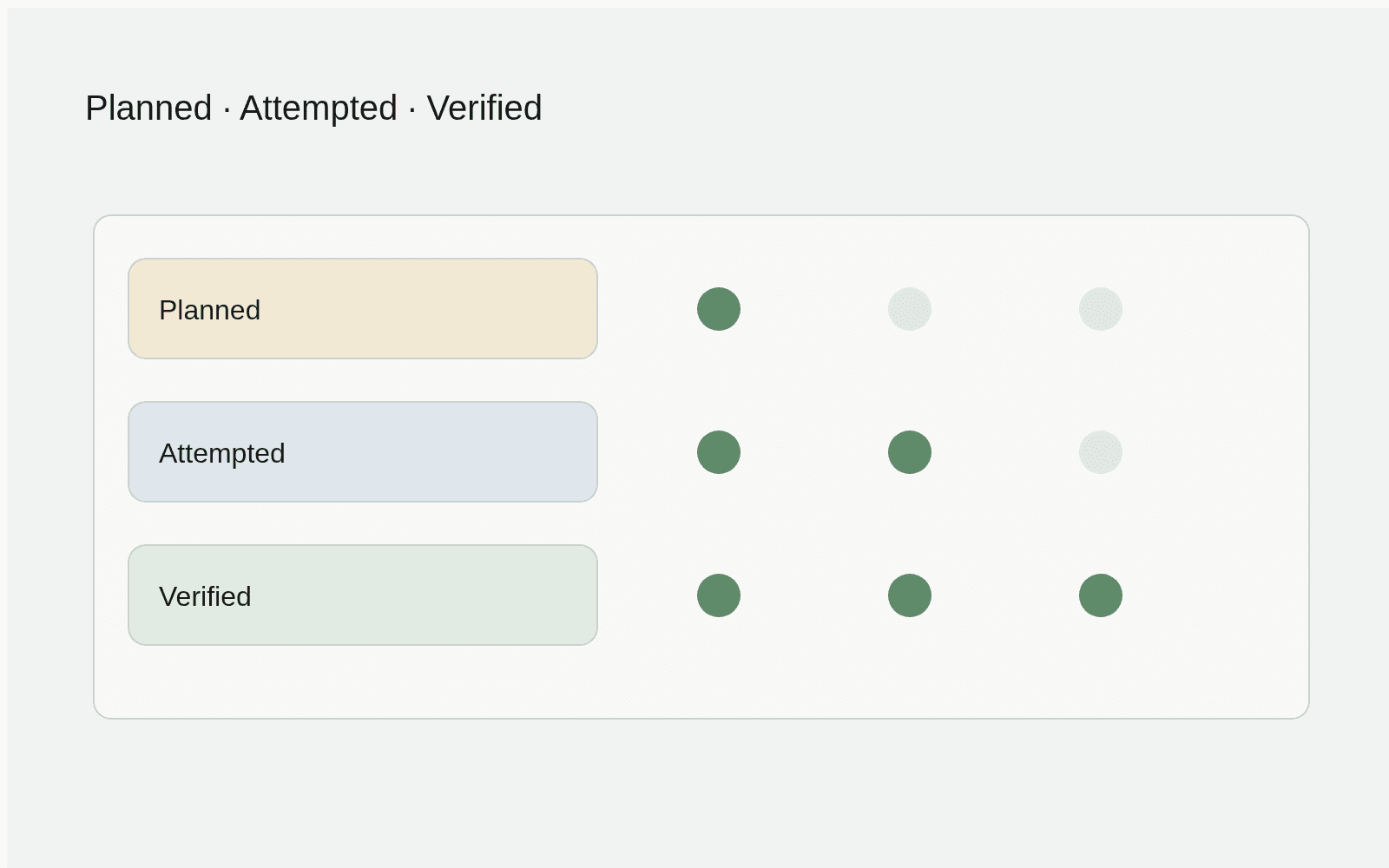
Planned work describes an intention. Executed work records an attempt. Verified work links an outcome to an acceptance check. Keep these meanings separate even when one task contains all three. A request sent before a timeout belongs under an unknown result until its receiving system confirms the outcome.
The current record is the merged version in Busabase. An old chat summary and an unmerged proposal can explain what happened, but neither should silently replace that version. This distinction makes memory useful across sessions without treating every remembered sentence as accepted truth.
Keep a checkpoint small enough to reread
Reuse a task Base. A proposed checkpoint needs a clear task identity, intended output, last verified stage, artifact references, outstanding questions and next permitted action. Link the existing work rather than copying it into several competing task records. Keep reusable acceptance rules in a Doc and the repeatable recovery method in a Skill.
For a coding task, the checkpoint can refer to a repository and commit or worktree state, but Git remains the source for code changes. Record which input version was used for verification. If the source or artifact changes later, the earlier check needs reassessment. The stored record does not restore a process or prove a deployment happened.
Reconnect, then inspect before continuing
The Codex plugin guide distinguishes plugin installation from Cloud MCP authorization. Install the plugin from the busabase/skills marketplace, authorize the connection, and start a new Codex task so the skills and authenticated tools load. Verify the account and selected space before reading project records.
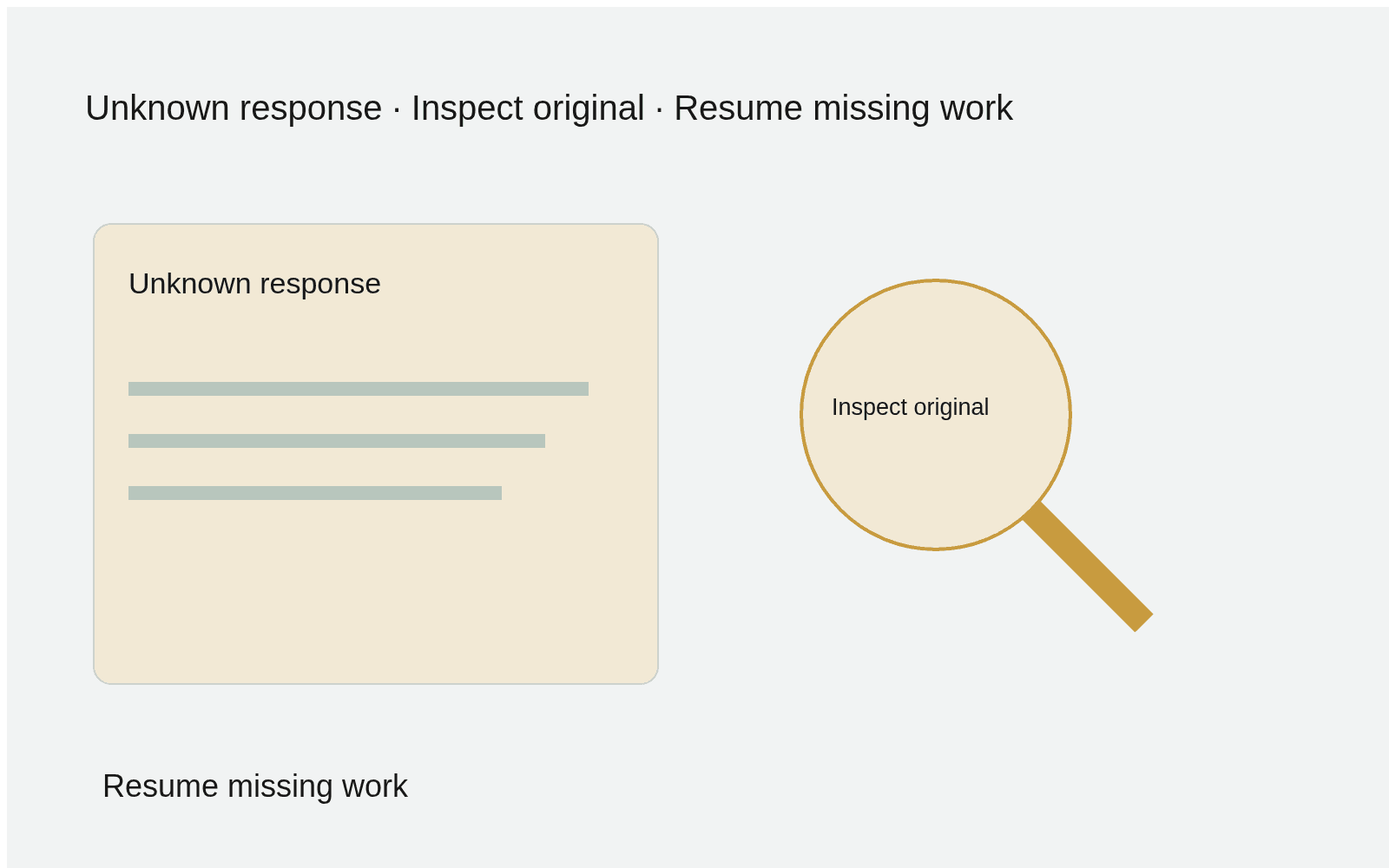
A first recovery instruction can be: “Read this task, its linked artifacts and original proposals. Compare the last verified stage with the current repository and service state. Identify completed work, unknown results and missing stages. Do not repeat external actions or create replacement proposals before checking the originals.” Give Codex the specific task and authorized resources; access to memory does not grant new execution permissions.
An unknown response needs investigation
If a submission timed out, look up the original request or ChangeRequest using the identifier already saved. A merged proposal requires a canonical readback. A pending proposal remains pending. A rejected or conflicting proposal requires its own resolution. If the original system cannot establish the result, preserve that uncertainty and ask the responsible person before an action with consequences is repeated.
This is different from replacing an agent's credential. Access handover concerns who can act; task memory concerns which work remains. Both matter, but a successful login does not settle an earlier action's outcome.
Save evidence that the next session can use
Ask Codex to return the artifact, checks actually performed, relevant versions and unresolved items. Write the accepted progress through a ChangeRequest, then reread the merged record. Review behavior depends on permission: use proposal-only access when a person must accept changes, or explicitly require review. A status label alone does not enforce that boundary.
Start with one interrupted task. The next session should be able to explain what it will reuse, what it will recheck and what it will do next, with links supporting each decision. That is a more useful test of memory than the length of its saved summary.