Memory for Muse: turn personal recall into shared business context
Separate private preferences from facts the team can reuse, update and trace.
A personal agent becomes useful when you no longer have to repeat your preferences and current projects before every task. But preparing material for colleagues introduces another question: which parts of that personal context can the team rely on?
A remembered customer request might be a confirmed commitment or just an idea from an earlier conversation. A policy may have changed since then. Muse’s personal memory is a starting point; shared business context also needs maintained sources, clear scope and a way to correct outdated facts.
Personal memory has a different owner
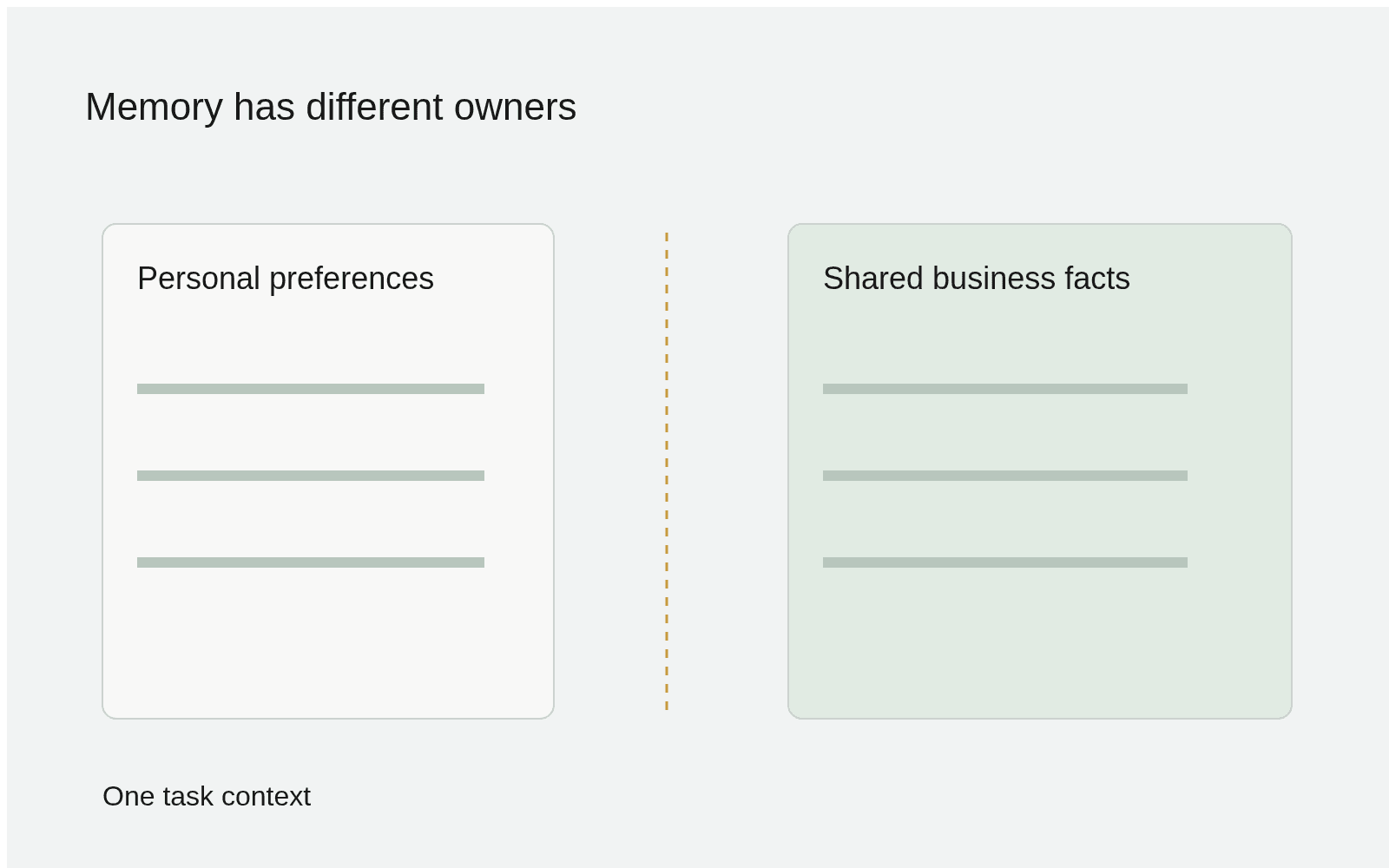
Memory for Muse begins with a practical distinction: remembering something about one person does not make it an accepted fact for a team. Meta describes Muse as a personal agent that remembers what matters to its user and runs on a dedicated Secure VM. A personal preference belongs there. A customer commitment, current policy or approved project constraint needs an owner and a shared source that another authorized agent can read.
Proposed operating method
Keep the personal and shared layers explicit
Muse’s security design describes its VM as the system of record for data put into Muse, and says people can inspect memory files and ask Muse to forget information. That describes Muse’s own environment. It does not establish a shared company record or synchronize it with another service. Keep transient task context in the task; preserve personal preferences privately; place confirmed business facts in shared records with source and applicability.
Build a small, inspectable memory model
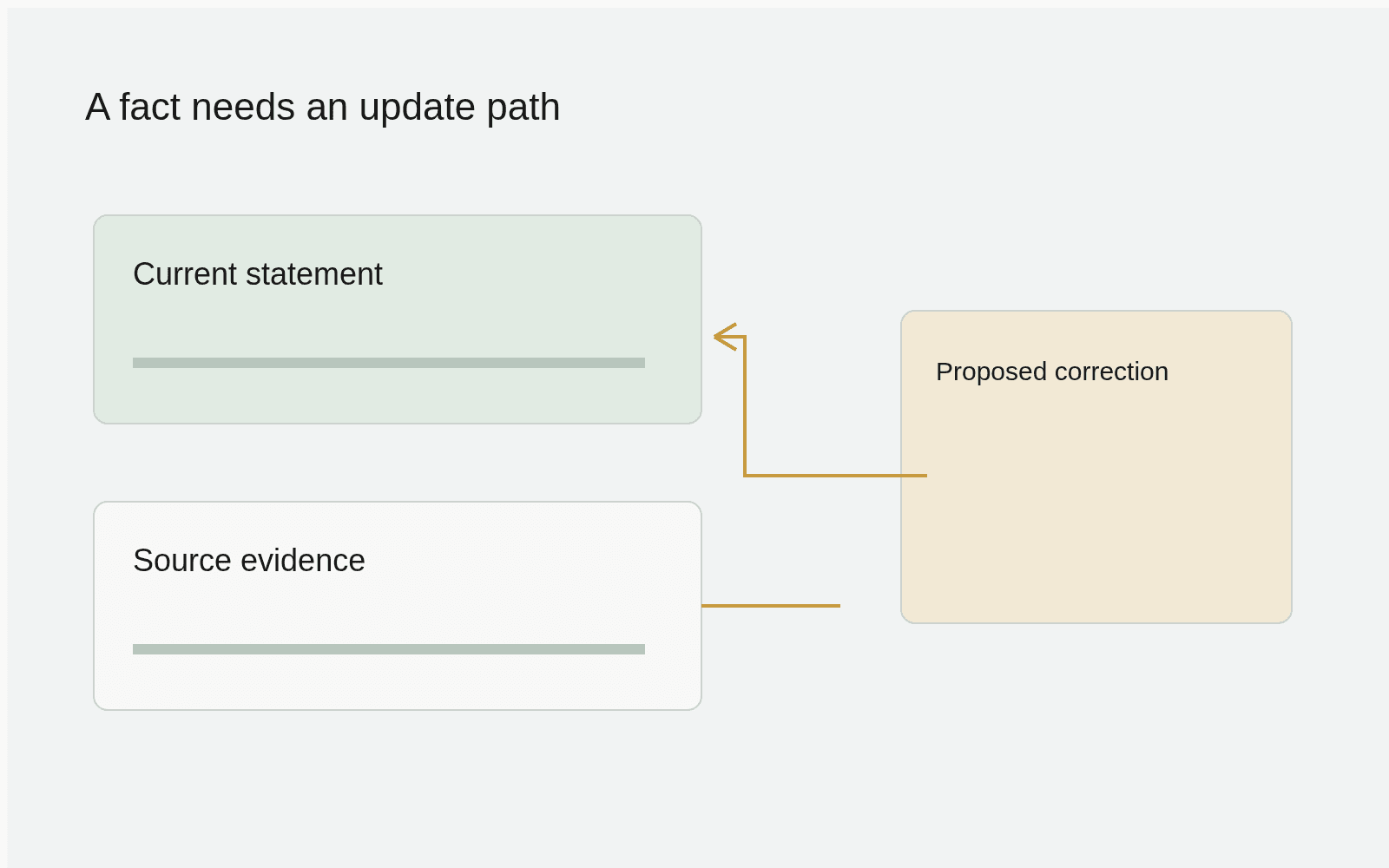
A starter Busabase setup can use a Folder for the project, a Base for reusable facts, a Doc for interpretation rules and a Skill for the connected agent’s retrieval method. Suggested Base fields are topic, statement, source URL, applicable project, owner, review date and validity state. Link facts to existing customer or project records rather than copying those identities. A source document provides the explanation; the fact record tells the next run which statement is current.
Proposed operating method
Prove one access path before promising reuse
Muse’s security guide says it can build custom connectors for services exposing APIs or CLIs. Busabase’s agent connection guide provides access options. This is a possible custom connection, not a dedicated Muse integration. Configure the specific Space and minimum permitted resources, then verify one authorized read. Sentinel permission for a Muse request and Busabase credential permissions are separate checks. Do not paste secrets into the memory text or assume a conversation grants API access.
Write proposals, then read current facts
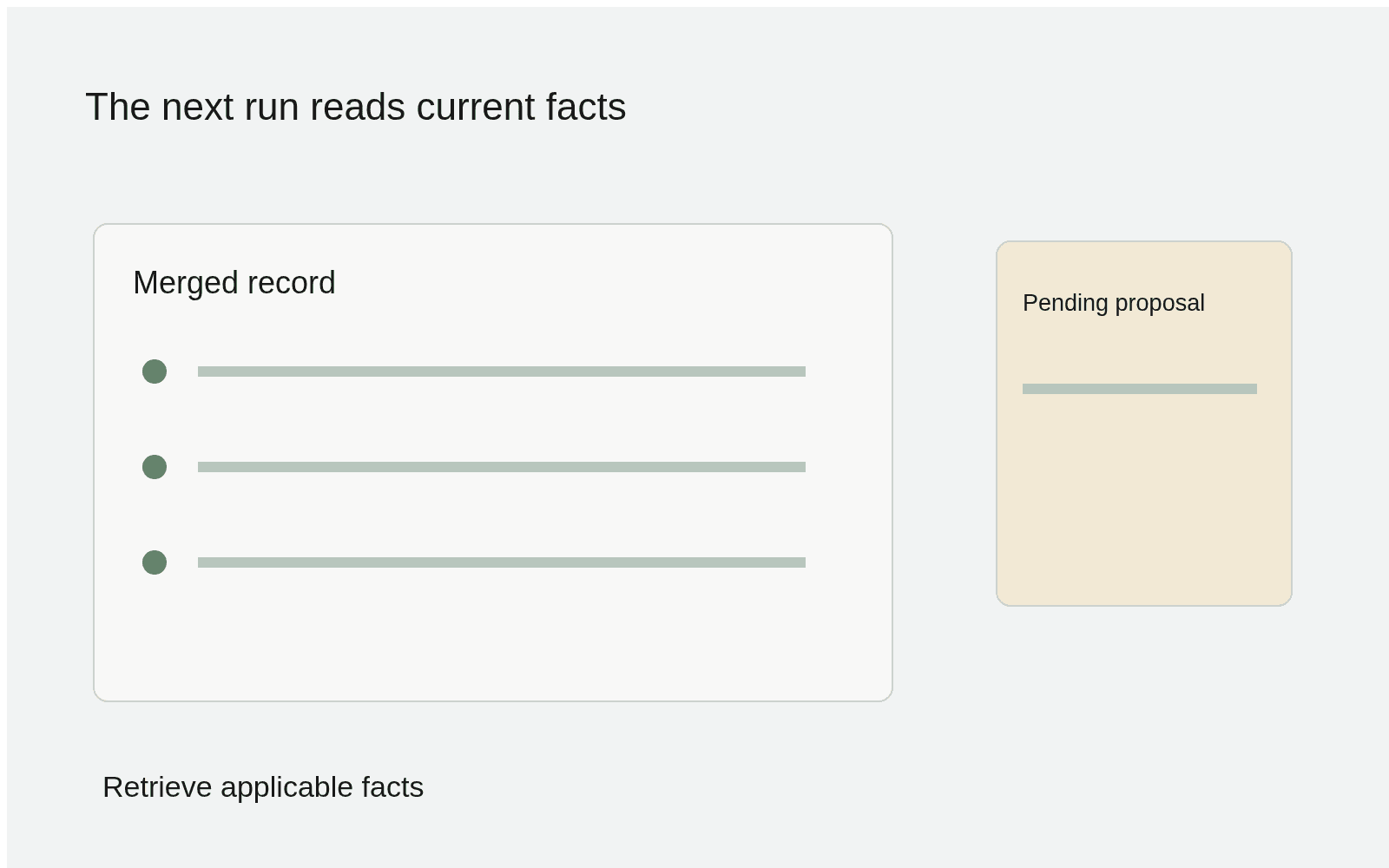
For reusable memory, ask the connected agent to retrieve applicable records before a task, cite the sources and propose changed facts afterward. ChangeRequests retain the before/after history. A write-capable credential may merge immediately; use a proposal-only credential or explicit autoMerge:false when a person must review. The later task reads the current merged record, not a pending proposal or an old answer quoted from chat. A merged change also does not automatically mean the business decision was approved.
Proposed operating method
Make correction and expiry part of the method
Give the agent an instruction such as: “Read current facts for this project and list their sources. Keep conflicting or expired facts out of the working assumptions. After the task, propose updates against the same records and return their links for review.” When a fact changes, revise its existing record with the new source; retain the old claim in history. Where evidence conflicts, keep the conflict visible instead of combining incompatible statements. A review date is a field, not an automatic expiry mechanism unless an actual process checks it.
Verify what survives the next task
The useful deliverable is a linked fact record, its evidence, the change result and a fresh retrieval showing which value the next task used. Correcting Busabase does not erase copies already placed in Muse or other tools; reconcile those copies through their own controls. Start with one authorized read and one reviewed update before recurring synchronization. That makes memory reusable through a defined method without claiming that either product automatically shares every conversation.