
Busabase × Muse Code
Knowledge Base for Muse Code
Muse Code can split a coding task across subagents and load project skills on demand. Those instructions and the resulting patches are different kinds of knowledge: one defines a repeatable method, the other proposes a change to the repository.
BOUNDARY
Parallel work is not a shared decision
Meta says subagents can share the checkout or request isolated worktrees. Isolation can be rejected; it does not silently fall back. Check the actual worktree and changed files before accepting a child result.
WORKFLOW
From agent output to accepted knowledge
Muse Code can split a coding task across subagents and load project skills on demand. Those instructions and the resulting patches are different kinds of knowledge: one defines a repeatable method, the other proposes a change to the repository.
- 01
Pin the project skill and the source commit - 02
Assign each subagent a bounded question or file set - 03
Compare resulting diffs and run the project checks - 04
Approve the method separately from the patch
REVIEW
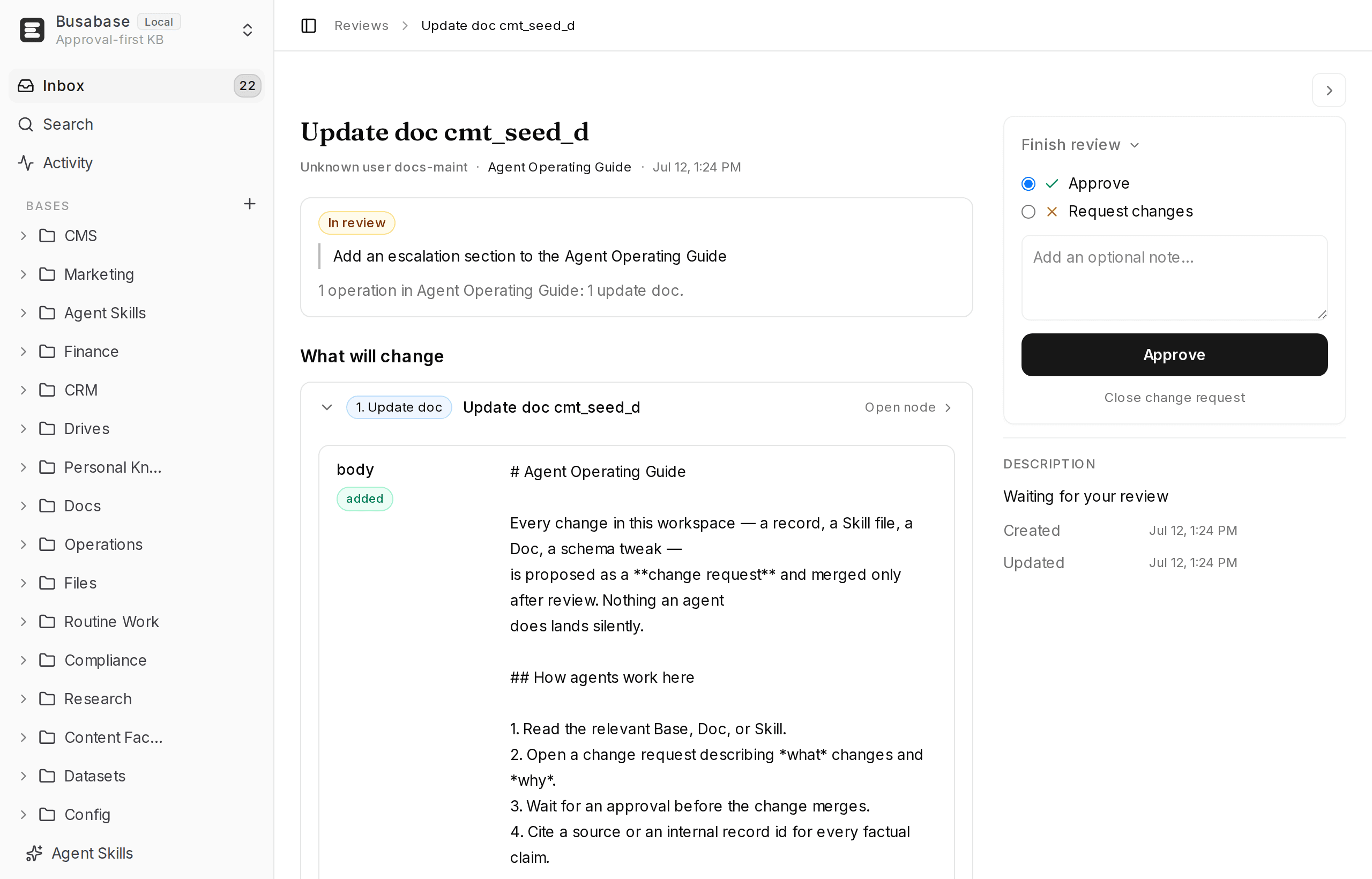
The acceptance record
Keep the skill version, child task, worktree, verification output, reviewer and accepted diff together.
FAQ
Practical questions
Parallel work is not a shared decision
Are subagents always isolated?
No. Meta documents shared-checkout children and optional worktree isolation; verify the actual mode used.
Does a skill install approve future code edits?
No. A reusable instruction and the changes produced under it need separate review.
What should a reviewer inspect?
The source commit, subagent scope, final diff, checks and ownership of each accepted change.
NEXT
Parallel work is not a shared decision
Keep the skill version, child task, worktree, verification output, reviewer and accepted diff together.
Connect Agent